True Crime Analysis, Breakthroughs, Insights & Discussions Hosted by Bestselling Author Nick van der Leek

Author: crimerocket_pmfrt4 (Page 74 of 74)

Chris Watts: Don’t Forget About Deeter!

As I left in my car this afternoon to do some grocery shopping, I noticed in my rear-view mirror a neighbor walking his dog. It’s a little dachshund, just like Deeter. I’d been meaning to ask him a few questions about temperament, so I hoped [while shopping] that he’d still be out walking the dog when I got back. Fortunately he was.

Fullscreen capture 20181024 232703

One thing I picked up during research for the first TWO FACE narrative was the neighbor at 2817 Saratoga Trail – 68-year-old Cheryle Hallowell – remarking on the dog’s barking being “different” on the day the family were killed.

2817 is not directly beside 2825, there’s one house in-between. Even so, the neighbor said she could hear the dog barking and what’s more, could tell the pitch of the bark changed too.

Fullscreen capture 20181025 001057

When I approached my neighbor, he had let go of the leash and the dog – Gigi – was moving around a neighbor’s brick wall sniffing various drainage orifices. I asked him – let’s call him Ted – about how he experienced Gigi’s barking.

“How long does it take if you leave the dog outside for him to start barking?”

TED: Well, it’s a her, and we don’t tend to leave her outside. She’s treated like…

“Royalty?”

TED: That’s the word.

“But if you did leave her outside, how long would it take her to start barking?”

Fullscreen capture 20180911 074437

TED: If she had something to distract her, like this, it would take longer for it to start. But she’d probably start after about ten minutes.

“What about the change in tone? You know when they go from barking, which is already quote loud, to a sort of whining and shrieking?”

TED: Hard to say. We don’t let that happen to her.

“But if you did?”

TED: Half an hour. They’re quite anxious animals.

I told him I’d lived beside another neighbor once who had a dachshund, and they worked during the day. And at some point in the day, every day, you could hear the dog bleating and shrieking from simply being left alone. It got worse and worse as the day wore on and grated the nerves. Not all dogs do this of course, but this one does.

Wikipedia also makes note of the dachshund’s idiosyncratic “separation anxiety”:

They can have a loud bark. Some bark quite a lot and may need training to stop…Dachshunds are known for their devotion and loyalty to their owners…If left alone, many dachshunds will whine until they have companionship. Like many dogs if left alone too frequently, some dachshunds are prone to separation anxiety and may chew objects in the house to relieve stress.

Dachshunds are burrowers by nature and are likely to burrow in blankets and other items around the house, when bored or tired. Their temperament and body language give the impression that they do not know or care about their relatively small size. Like many small hunting dogs, they will challenge a larger dog. Indulged dachshunds may become snappy or extremely obstinate.

Fullscreen capture 20181024 235316-001

Many dachshunds…growl or bark at [strangers].  Although the dachshund is generally an energetic dog, some are sedate. This dog’s behavior is such that it is not the dog for everyone. A bored, untrained dachshund will become destructive. If raised improperly and not socialized at a young age, dachshunds can become aggressive or fearful.They require a caring, loving owner who understands their need for entertainment and exercise.

Fullscreen capture 20181010 091041

Dachshunds may not be the best pets for small children. Like any dog, dachshunds need a proper introduction at a young age. Well trained dachshunds and well-behaved children usually get along fine. Otherwise, they may be aggressive and bite an unfamiliar child, especially one that moves quickly around them or teases them. However, many dachshunds are very tolerant and loyal to children within their family, but these children should be mindful of the vulnerability of the breed’s back…

Fullscreen capture 20181024 234743

What we get from all that it is:

A. The dachshund’s loud bark is an issue. Deeter’s bark was an issue and we know it was because the neighbor heard it the day of the murders, Monday August 12th.

B. The dachshund’s temperament [its separation anxiety] is an issue. Deeter’s temperament meant he couldn’t be left outside when the crime/cover-up was committed, not even for a short time, and especially not at night, as this would soon awaken/disturb/alert the neighbors.

C. Its loyalty to family members is an issue. If one family member wishes to murder another or several, sequestrating the dog will likely form part of the preplanning. Given the propensity to bark after a short period, it’s not ideal to leave the dog outside, and then be seen [during the commission or cover-up of the crime], awake and opening the door for the animal. Given the loudness of the bark, somewhere has to be found inside the house that is soundproof. Three possibilities in this respect are the basement, the upstairs laundry and the inside of a vehicle parked in the garage.


Fullscreen capture 20181024 235158Fullscreen capture 20181022 130453Fullscreen capture 20181015 234524

Since the neighbor from two doors away heard the dog on the Monday when Shan’ann and the children were considered “missing”, and since by then already the barking had escalated from normal loud barks to anxious hysteria, it’s clear that when Nickole Atkinson arrived, Nickole who was right in front of the door HAD to have heard Deeter barking too.

In an article by the Daily Camera posted on August 15, Madeline St. Amour reports on visiting the Watts residence sometime on Tuesday August 14, but that:

…No one answered the Watts’ door when the Times-Call knocked, although a small dog did come to the door and bark.

Wouldn’t Deeter have done the same when Nickole came round? We know from the latch that Nickole was able to open the door, but only three inches. Could she see Deeter?

We know that when Nickole arrived at the house, Deeter had been left alone [counting from when Chris Watts left the house after 05:27] for at least five hours. That’s more than enough time for a dachshund to experience chronic distress.

“What about the change in tone? You know when they go from barking to whining and shrieking?”

TED: Hard to say. We don’t let that happen to her.

“But if you did?”

TED: Half an hour. They’re quite anxious animals.

What if Deeter couldn’t come to door, but Nickole could hear him loud and clear? Could it be that the dog’s hysterical barking and shrieking inside the house, and perhaps the dog’s inability to get to the front door on Monday was what got Nickole to call the cops as soon as she did?

Was Deeter the first one to raise the alarm?

Deeter Dieter Watts dog

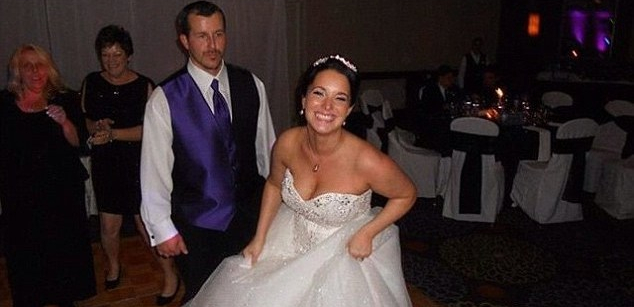
Who Changed More over the course of their Marriage – Chris Watts or Shan’ann? [DISCUSS]

When one person changes inside a marriage, it causes a strain. When one person changes jobs, or a career, it causes a strain. When both people change, the strain can reach breaking point. In the Watts family the breaking point came with trauma and tragedy. We have an idea about the finishline to this spiral of strain, but what of the spiral?

How did the relationship unravel? How did the individuals within that relationship unravel?

In Chris Watts’ video about relationships, just beyond the halfway mark he suggests that “it’s generally the more attractive one that leaves…”, then double’s back and says enigmatically: “I agree [with that] somewhat, and I disagree with [it].”

What do you think he means by that?

Backtracking to a few seconds prior to this statement, let’s follow the transcript:

WATTS [Reading from a prepared script]: Reasons relationships start to fall apart: sometimes you no longer find your partner attractive – physically, or in their personality. When you’re in a relationship you have to show desire, lust towards your partner….But if you want your relationship to keep going I would suggest, maybe going to a place where you first met…go bungee jumping…go somewhere that will bring the excitement back. 

It’s noteworthy that Watts highlights “showing desire/lust” as something one “has” to do in order to have a relationship, and as the first reason to prevent it from “starting” to fall apart.

you have to show desire

Fullscreen capture 20181022 190907But the terms in which Watts expresses this are clearly off. If a relationship is deteriorating, telling yourself “you have to show desire” is probably the last thing the relationship needs. Often when a couple is put off by one another, trying to push the lust button only makes matters worse.


Probably, in a conventional relationship, especially with young adults, that lust, libido, desire and physical attractive is all there. It’s hot-wired. That’s not the problem. The problem is more likely a lack of attentiveness, sensitivity and interest, perhaps due to business or distraction or exhaustion. That’s the area one has to deal with. Intimacy. Communication. Listening. I care about you. Do you care about me in the same way or not?

WATTS: You no longer experience closeness. Or when your differences become more important than your similarities. [Looks up] You just pick-apart your partner. And you don’t see anything that you have in common any more – you just see that something he or she does and it just gets on your nerves and you just can’t let that go.

This is another interesting aspect he highlights. The growing isolation in a relationship happens because of fundamental differences that are more important than similarities.

[Glances down at his laptop] And you feel you might do better with someone else that-that you’ve met. [Looks at laptop but he’s not reading] You think that you can no longer do – that your partner is someone that you can’t be with. [Reading from the presentation] When you feel you are putting more in the relationship than you are getting out…

It’s important to remember, some of what Watts is saying here is generic relationship stuff. It’s the low-hanging off-the-top-of-my mind first Google search result vanilla stuff. That’s not what we’re looking out for. What we’re looking out for is what’s going on between the scripted stuff. When we give a prepared presentation, we stick to the prescriptions in it, but in our reinforcements, we stray from them, revealing our true feelings.

So when Watts uses as an example “picking-apart” one’s partner, that’s not in the presentation. That’s coming from his own personal and private field of reference. When he mentions not having anything in common and something [here he’s pointedly careful to make it “he” or “she”], then he uses the loaded term “you can’t let that go”.

One of the biggest unknowns in this case is Chris Watts’ sexuality. Is he bisexual or not? In what appears to be a pretty stock-standard presentation, Chris Watts is stock-standard, or is he trying to be?

The issue of Watts’ sexuality isn’t to be sensational, or to manufacture tabloid fodder out of thin air. According to the Daily Beast in a piece specifically querying the notion of Chris Watts’ “double life” [a second face] the article mentions:

A source close to the investigation [said] that Chris had affairs with both men and women. It’s unclear if Shanann knew about the alleged liaisons, [but Shan’ann’s mother said] Shanann and Chris were planning to separate. Two of Shanann’s friends [Nickole Atkinson and Amanda Thayer] said she [Shan’ann] suspected Chris was cheating on her. 

So Chris Watts’ sexuality is extremely relevant to the investigation and will be a key element at the trial. His sexuality is central to why this crime happens because it cuts to the core of the actual dynamic going on between Watts and wife and Watts and the family dynamic in general. We have a red carpet rolled into his mind going into this vital area thanks to this video.

Watts is presenting [presumably] to a heterosexual audience about relationship deterioration and repair. Anyone who is heterosexual wouldn’t even consider the nuances of the sexual spectrum because we tend to accept that we’re heterosexual, most people are heterosexual.

Amanda Thayer said in an interview that Shan’ann told her when they met she had to do all the work and that he had no game. Six years into their marriage, Shan’ann confided that although she suspected infidelity, she was confident that he still “had no game”. Why was she so confident?

That’s also somewhat at odds with her own version on a Facebook Live video where she describes him sticking by her, putting up with her at her worst, and sticking around when she was pushing him away each day and continuously giving him a reason to leave, and an out. It feels like there are a lot of mixed messages here, truth and deception mixed up from both of them. Both of them seem to be presenting an idea of themselves and each other, rather than living it or knowing it for real.

The most significant verbal slip in the speech, when he goes off script is quick and easy to miss, but here it is:

…you feel you might do better with someone else that-that you’ve met. [Looks at laptop but he’s not reading] You think that you can no longer do – that your partner is someone that you can’t be with.

It’s in the way he frames the response to doing better with someone else.

You think that you can no longer do…

It could be he’s referring to the idea of living a double life, and finding “you can no longer do it” or “you can no longer do it to yourself”. This is exactly the sort of inner monologue a bisexual or gay person might have when they decide they can’t or won’t continue living out their ruse. “I just can’t can’t do it any more. I can’t live like this.” To be fair, it could also be Watts simply misreading from the line above [“do better”].  When we actually join those words to what he was originally saying we get:

You think that you can no longer do better…

When re watching this moment, where he interrupts himself after the word “do”, he’s actually looking down at that moment. He’s not reading.  At the moment he makes the slip his head jerks slightly and he returns to his script. The looking down while going off script suggests introversion, closedness and tension regarding this aspect.

So, returning the original question:

Who changed more during the course of their six year marriage? Who changed more physically? Who changed more sexually? Who had the greatest personality change? Which partner became more attractive vis-a-vis the other?

At trial, this will be a vital question, because the one who changed the most grew the most, and the one who became the most attractive would have most wanted out when things went south.

44597621_1149739525178544_4197063894444802048_n44680956_1149739748511855_8160687735007346688_n

Newer posts »