“Fightback” is the title of episode 5, but I think “Popularity Contest” is more apt. In a scenario where their daughter is missing, and a criminal investigation is underway, you’d think the fight back would involve fighting for more police resources, getting more detectives working the case, or getting out there themselves and searching, or making Madeleine’s DNA available to the authorities in Portugal using DNA from her clothing or bed or soft toys in Portugal, or investigating for themselves the possibility that Madeleine had died [had the abductor killed her]?
Instead, the fightback is a popularity contest fought in the media. And the prize is nothing more or less than the McCanns’ rehabilitating their own image. Of course there’s also a cash incentive to this. When they’re considered suspects, the “income” of the fund drops, when they’re able to court public sympathy, they “income” of the fund shoots up again. And this income isn’t to be sniffed at, it eventually balloons to millions upon millions of pounds. With this war chest the McCanns can invest in even more media coverage, reputation management, legal representation, legal suits and expert advice, more PR, merchandising and all the rest.
During one spiel in episode 5 Kate McCann emphasises that 99% of people support them, and only 1% are trolls. There’s also a nice scene where they show large boxes labelled “Support” compared to a small battered, mostly empty little box where “hate” mail is kept. What the McCanns seem to be saying is they’re winning the fightback because they have popular support. Far more people love them and support them compared to a tiny minority of detractors.
POLL🔴 Are McCanns to blame for their daughter Madeleine’s death…directly or indirectly?#MadelineMcCannNetflix#mccann
— Madeleine CaseTweets🌐 (@McCannCaseTweet) March 17, 2019
In a recent poll conducted on twitter, over 90% of over 3000 people who voted sided against the McCanns, blaming them either directly or indirectly for Madeleine’s death.
Then it’s Gerry’s turn to make the case against those who have “nasty” attitudes to them.
Gerry looks bemused here, rather than hurt or stung, doesn’t he? One might even say he looks a little smug.
He’s still smiling as he places the solitary smidgen of hate mail in its sad, sorry, mostly empty box.
For all their bravado, one of very, very few instances where Kate McCann appears emotional and vulnerable, even slightly tearful, is when she talks about “what people out there” say about whether or not she loved or cared for her eldest daughter.
It's interesting how she gets more emotional over "taunts" than we ever see her get talking about Madeleine. This is the most emotional I think I've ever seen her>Kate McCann breaks down in Netflix doc https://t.co/GwR0PVa62F#McCann#TheDisappearanceofMadeleineMcCann
The docuseries then spends a little time dealing with the notion – which came from the public – that Kate McCann especially didn’t appear to be grieving, and didn’t appear very emotional after the loss of her daughter. The image below, of a shirtless Gerry McCann jogging beside Kate was taken on May 16, 2007, less than two weeks after Madeleine’s disappearance.
In DOUBTI’ve made the case that running plays more than an incidental role to the McCann case, and as it happens, to solving it.
Watch at 2:21 in the video clip below, as Kate McCann addresses the camera, begging and pleading for the safe return of her daughter.
Unfortunately the most damning “evidence” against the McCanns – certainly in the court of public opinion – is the least damning in an actual court. As so often happens, the public cotton on to what they regard as inappropriate affect. They did with Chris Watts [and were proved right]. They did with Burke Ramsey [and the jury is still out, and probably will be till the cows come home]. And they did the same with Amanda Knox [and were apparently proved wrong].
The fact is, emotional affect is a powerful indicator in true crime, but it’s not necessarily evidence. One thing we can say, as human beings, is when we care about a victim more than the suspect [or imputed suspect], and when we feel grief more than we see them grieving [if at all], it’s only right that we raise our hands and ask about it.
It’s very difficult to cover up [which is a contrivance, and a way of masking authentic motives and feelings] and show genuine emotion at the same time. Covering up requires careful thinking and anticipating what the next question or move might be. It often happens in true crime that the suspect feels the best “face” to show to the crowd is nonchalance. They imagine grief will appear as guilt, but only a guilty person would think that way.
I love the way the docuseries has the McCanns PR person explain that the McCanns were “advised” not to show emotion, as this might be detrimental to their daughter. So imagine the abductor is sitting somewhere, with Madeleine in a cage, and he sees the parents looking unemotional. Is this going to encourage him to…do…what?
On the other hand, if the McCanns appear distraught and upset, this is going to make the abductor NOT want to return the child?
The reality is, whether the McCanns were instructed to be emotional or unemotional, there is a lot of inappropriate smiling going on, especially when they’re asked about whether she might be dead or not.
For all their posturing about the support, it’s clear the online vitriol [which continues today] is so severe, even newspaper editors felt they had to shut down the interactivity [the comments] of their coverage of the McCann case.
The docuseries neglects to mention that the McCanns felt so agitated and imperiled by negativity directed towards them, they elected to threaten British bloggers and social media users with lawsuits.
It’s also more than a little disingenuous of the Leicester Mercury to cry “neutrality” and editorial standards after the fact, when anyone who dared to criticize or accuse the McCanns were sued.
Of the first five episodes, I found the fifth the most troubling and upsetting by far. Probably the worst moment was when the Portuguese journalist Sandra Felgueiras expressed her feelings of disdain to the Portuguese cops for lying to her about DNA evidence.
The DNA narrative was a HUGE PR and legal victory for the McCanns, and turned the tide of popular, investigative and legal opinion back in their favor, and as result, this remains the official status quo today.
Was Madeleine McCann last seen in her bed by her father, Gerry McCann, at approximately 21:15 on May 3rd? That’s the popular default narrative. That’s where Kate says Madeleine was taken from in her book, isn’t it? And it’s what the media mainstream believe, isn’t it?
It’s also the contention of the Netflix documentary THE DISAPPEARANCE OF MADELEINE MCCANN that Madeleine was abducted from her bed and then through the bedroom window. Presumably this is also the main thrust of the theory of British investigators.
In the DOUBT trilogy I put forward a different theory.
There are a few reasons to believe 1) Madeleine never went to sleep on May 3rd, 2) if she died in the apartment, she didn’t die in bed and 3) after she died [assuming she did die] she wasn’t carried from where she fell or lay to her bed.
This is a slippery line of reasoning so try to follow me. We start by looking at the crime scene photos of Madeleine’s bedroom. Interestingly, the Netflix docuseries hardly ever refers to the original police photos.
It’s not terribly clear, but one can just make out a light pink object on Madeleine’s pillow. There’s also a darker pink object, a child’s blanket, in the foreground below the pillow. The light pink object is clearly sitting on Madeleine’s pillow and slightly obstructed from view by the darker pink blanket below it.
Madeleine’s soft, pink Cuddle Cat toy is more evident in the image below.
In dramatised versions of the scene, Cuddle Cat on the pillow and the pink blanket under it are more evident.
Now in theory, this picture is precisely what we’d expect to see. If Madeleine was sleeping or in bed when she was abducted, and she was always with her toy, then the toy would have been left behind precisely where it is left behind.
The problem is, cadaver odor was found on the toy – the pink Cuddle Cat – when it was searched in a separate area, the villa on Rua das Flores where the McCanns moved to a few weeks after the incident.
Goncalo Amaral describes in his book The Truth of Lie how Eddie, the cadaver dog, approached the wicker chair and alerted to the toy on it.
This is not the moment Amaral refers to [at 1:34]in the video below:
At first the toy isn’t on the wicket chair but seems to be inside a basket and under something. It’s not easy for the dog to get to because it’s sort of behind a jutting wall. The dog is nevertheless interested in the area, sniffing the curtains and the floor. Then Eddie hops up, grabs the toy, drops it, scurries off before snatching it again and dropping the Cuddle Cat in the middle of the lounge floor.
The videographer is obviously stunned by this, and fixates for a few seconds on the little girl’s toy lying – cadaver-like – on the gleaming slab of floor.
But the moment Amaral sketches in his book appears to refer to an alert in the kitchenette area at about 5:33. Here the dog also hops up to sniff papers before alerting loudly. Grimes clearly seizes the Cuddle Cat from behind the cupboard, in this instance, and holds it up to the camera.
There’s also a moment at 3:24 when Eddie enters the closet area of the parents’ main bedroom, and spends a long time inside it on the ground level [presumably where the shoes are]. When Eddie finally emerges Grimes bends down and briefly lifts from the floor and examines what appears to be a darker pink blanket, similar in color and texture to the one seen in crime scene photos on Madeleine’s bed.
Now we know that Kate washed Cuddle Cat and contaminated the toy every time she went out in public, which was a lot.
So the fact that the cadaver dog alerted to Madeleine’s toy after three months of washing, contamination [including by Amelie] and airing is pretty incredible in itself.
— Nick van der Leek – True Crime Rocket Science (@CrimeRocket) March 20, 2019
As soon as we regard the cadaver alert on the Cuddle Cat as genuine, we’re faced with a conundrum. It suggests Madeleine was clutching the Cuddle Cat when she died, or conversely, the Cuddle Cat was in contact with a dead person for an extended period of time. In this scenario, the deceased person was the likeliest to be Madeleine, not so?
So in this scenario, did Madeleine die in her bed, with Cuddle Cat beside her? It’s certainly a possibility except for the alerts – blood alerts – behind the living room couch in apartment 5A.
The mere suggestion of blood invokes the possibility of injury. And if blood was discovered outside the bedroom then there is an inference that Madeleine wasn’t in bed when she died.
The cadaver alert below the balcony in the flower bed invokes the likelihood of a fall. Did she fall with Cuddle Cat? If so, if she didn’t die in her bed, then how did Cuddle Cat end up in Madeleine’s bed?
There’s also another serious issue. If the dogs alerted to cadaver odor on Cuddle Cat three months after the incident, why didn’t they alert to the bed where we know Cuddle Cat was found? For that matter, why wasn’t any blood visible on Madeleine’s pillow or blankets?
Well, we know from Amaral’s book that the linen on the bed was stripped and washed soon after.
Amaral also raises another pickle, in the strange configuration of beds in the McCann’s bedroom. The single beds are mooshed together, but then both beds are pushed across the room leaving a great deal of space open on the wardrobe side. Enough space for the twins cots.
Amaral’s makes the astute observation that it appears the twins were kept in one room with the parents, while the third child was left on her own in another room. Perhaps because Madeleine had trouble sleeping, and would rouse the others when she was in distress.
Besides the possibility of Cuddle Cat developing Chucky-like self-locomotion skills and crawling back to Madeleine’s bed, there’s the question of whether the cots were trafficked back to Madeleine’s room. Why? To reinforce an impression that all the children were sound sleepers. When one slept, they all slept and they all slept together.
https://youtu.be/4YSAlGpGo34
There’s also the strange set-up of the other bed in Madeleine’s bedroom. It looks more slept in than Madeleine’s bed does.
The notion that the shutter was raised and the abductor fled through the open window of the children’s bedroom has a serious flaw as well. If all three children were asleep in the same room, then opening the metal shutter would have caused it to rattle loudly as it was lifted, a risk an intruder wouldn’t have wanted to take. It would have alerted passersby in the street, other folks in the apartment complex not to mention the two children in their cots the abductor needed to carry Madeleine past on his way out the window.
Kate McCann also claimed she looked under the bed for Madeleine. Not under the cots, under a bed where there was no place for a child to hide.
So let’s ask the question again, and this is a yes or no answer:
Was Madeleine McCann last seen in her bed by her father, Gerry McCann?
As early as 12 May 2007, the reward for the safe return of Madeleine McCann stood at £2.5 million. If Madeleine was abducted, and if she was still alive just nine days later, why on earth would she still be trafficked when her captors stood to make this kind of money?
All they had to do was leave her in some remote location and simply provide information where she was, and they’d be rich beyond their wildest criminal hopes. If their motive when [if] they abducted her was to make money, make a profit, then what could have been a more profitable outcome than this?
Ultimately, no one ever claimed the reward money, right?
Wrong.
In April 2011, eight years after her disappearance, £1.5 million was donated by News of the World to the Find Madeleine fund. When Gerry McCann was contacted by email at the University of Hospital of Leicester [where he was employed as a Consultant Cardiologist] about these funds he did not admit or deny that he had received them. Instead he referred the inquiry to News International. News of the World were more forthcoming. They confirmed the money had been paid into the “official” Madeleine Fund.
It’s pretty incredible, after the brief opening montage of cadaver dogs, that the PR person gives a voiceover “explanation” for the episode, summing it up as a “backlash”. Really? After three months of PR, when the dogs go in and find traces of a dead person, and this is the first evidence of what really happened to Madeleine, that’s a “backlash”?
Are dogs barking a backlash?
The fourth episode in the series, obscurely titled Heaven and Earth, is the best of the first four episodes which is another way of saying the most damning. A better title would be Backlash, or Putting a Nice Spin on the Cadaver Evidence.
Episode 4 is damning. Unfortunately many – especially in the media – don't understand that when cadaver odor comes into play there's no more wiggle room for a missing person. A cadaver means someone is dead, in an apartment, a cupboard, behind a couch, in garden, in car. #McCann
I suspect the 4th episode is the most damning of the entire series. I haven’t watched the entire series, but I suspect from here the narrative turns and builds back up to Madeleine being alive, the McCanns recast as a model of British moral decorum before defaulting to “there is always hope”.
Six Useful Insights from Episode 4
1. I liked that episode 4 kicked off straight to the point, with no muss, no fuss. It went straight to the dogs and provided a smidgen of extra archive footage of Grimes and the dogs at work than I’ve seen previously. But I thought it was a little tricksy to show the cadaver dog in the opening clip with no context, thus psychologically conflating Eddie’s alerts with Keela’s.
2. I liked that they provided an accurate representation of where the dogs alerted inside the apartment, even if it was slightly misleading by leaving out the important alert outside [in the garden below the balcony at the back entrance].In a later post I will explain why an additional alert in Madeleine’s bed should have been made [and would have had the cadaver dogs been brought in immediately] but wasn’t. It should be noted that some of the media graphics are incorrect and inaccurate not only in terms of the layout of the apartment, including the McCanns’ bed and closet configuration, but also what constituted the “front” and “back” entrance. This is somewhat confusing. The front entrance faces the road and car parking lot, while the back entrance faces the front of the hotel, and the balcony.
An updated diagram from 9News.co.au provides additional context for what is the front and back entrance.
The “front door” opens up into the area depicted below:
3. Keela [the blood dog] is shown giving a silent alert behind the sofa. That footage is fairly rare, and thus useful. Usually when one looks at the evidence of the dogs, we see Eddie jumping over the blue sofa [2:22 in the clip below] and barking loudly from behind the sofa as Eddie gives a strong and unambiguous alert.
I do think it’s interesting that the Netflix docuseries seemed to concentrate more on the blood dog alerting, which benefits the “Madeleine is still alive” narrative slightly, whereas the cadaver alerts certainly do not. Of all the dog alerts in and outside the apartment, there were more cadaver alerts than blood alerts, and yet the docuseries chose to focus on the single blood alert behind the sofa.
Interestingly, although the dogs went in on July 31st, three months after the incident, it was only reported in the media on August 15th, 2007. At the time, an updated picture of Kate McCann was published sitting on the rocky shoreline on the western side of Praia da Luz [i.e. on the side of the beach opposite to the monolithic Rocha Negra]. Thanks to the archive protocols of Getty Images, we know for a fact that this image was taken on the same day the press revealed the cadaver dog evidence [August 15th, 2007]. Even so Kate McCann can be seen smiling in photos and greeting well-wishers. Both her and her husband are dressed in matching white and khaki, and as usual, Kate is carrying her daughter’s pink cuddlecat toy.
4. In point #1 I mentioned the tricksy editing of showing Eddie barking with no context, and then explaining what Keela was doing. It’s interesting how Robbyn Swan, the co-author of Looking for Madeleine [there’s a 2019 update to her book] is pertinently quoted saying Keela was “not particularly interested” too. This falsely implies that the blood dog just like the cadaver dog was “not interested” or didn’t alert. But the blood dog is trained to only alert to human blood traces, and the cadaver dog to human cadaver traces. If anything it’s a credit to the incredible sensitivity of these animals that one dog alerted to one set of distinctive traces, while the other did not. It should also be remembered that the apartment was visited after three months of summer, when the potential for the evaporation and dispersion of liquids and odors were at a maximum.
Then, when the narrative flips over to the traces in the vehicle, the cadaver dog becomes the focus, while the PR person ridicules the idea that the car was only hired several weeks after the incident, so how could a dead body “magically appear” in the vehicle. This is ridiculous, and ludicrous, is the inference. Of course, the blood evidence inside the vehicle [found by Keela] ought to be the focus of the dogs, but instead the focus goes to the cadaver dog. Interestingly, no mention is made of cadaver traces also found on the key of the Renault Scenic.
In a story on page seven, Jornal de Noticias carried the headline: “Dogs detected scent of a corpse on the car keyof Madeleine’s parents.” The following sub-headline read: “Policia Judiciaira suspects transportation of a corpse.”
The article – which is not attributed to anyone, not even unnamed police sources – added: “English dogs helping the Policia Judiciaria in the investigation of the McCann case detected a strong scent of a corpse on the key of the McCann couple.”The animals also detected a sample of blood in the boot of the Renault Scenic which was examined along with other cars belonging to the McCanns’ friends.”
The paper went on to claim that the person who hired the car the McCanns is also being investigated before speculating that the corpse scent on the key could have come from contimination with another item which had been in contact with a dead body.
It also reported that another British police dog scented blood in the car’s boot, which ‘precisely indicates that a corpse could have been in that boot’.
In a further sign that the Portuguese media are not letting up in their attacks on the McCanns, Diario de Noticias carried an article by a former director of the Policia Judiciaria, Francisco Moita Flores, alleging that British police have been ‘manipulating’ the Portuguese investigation and that there had been political and diplomatic interference from the UK authorities to protect the McCanns.
The latest outrageous claims in Portugal come after Mr McCann was forced to respond to claims that he and his wife accidentally killed Madeleine with an overdose of sedatives. A spokeswoman for the couple said last night: “This is just another example of the wild, unfounded speculation in the media which Kate and Gerry find very unhelpful.”
Police spokesman Olegario Sousa was unavailable to comment on the latest allegations. Meanwhile, Mr and Mrs McCann are becoming increasingly frustrated at the way the Find Madeleine Fund is being administered. During their 16-week stay in Portugal, the couple have been paying much of the cost of maintaining awareness of their missing daughter from their own pockets, with cash from the £1million fund being released to them on a piecemeal basis.
A friend of the family said: ‘They’re remarkably patient and know people are trying to protect their interests but it’s very different when you’re in Portugal from when you’re in the UK. “The people operating the fund clearly think they have to protect the fund because they don’t know how long it’s going to last but Gerry thinks now is the time to be spending money because this is the time when it’s going to be most effective.”
Although the fund is mostly run by friends and family of the couple, they are keeping a tight rein on how the money is spent and have released just £70,000 from the £1,005,000 donated.
This has gone towards setting up a Find Madeleine website, producing wristbands, posters and T-shirts bearing the ‘Look for Madeleine’ motto, the cost of a campaign manager as well as legal fees.
They are finding it increasingly difficult to cover the cost of staying in Portugal while paying the mortgage and bills on their home in Rothley, Leics, while effectively being out of work. This is thought to have prompted Mr McCann to declare last week that he will soon be returning to work.
The fund, which was set up with four specific objectives – one of which is to ‘provide support, including financial assistance, to Madeleine’s family’ – has been established as a limited company rather than a registered charity because it does not have any public benefit. It is run by six directors.
Former GMTV presenter Esther McVey, who runs her own PR consultancy and is the Conservative prospective parliamentary candidate for Wirral West, is among the directorsas is Mr McCann’s brother, 48-year-old pharmaceutical sales repJohn McCann, and Mrs McCann’s uncle Brian Kennedy, 68, a retired headteacher.
Retired hospital consultantPeter Hubner, 64, hospital director Douglas Skehan, 54, and former Leicestershire coroner Philip Tomlinson, 76, are the other directors of the fund, set up within two weeks of Madeleine’s disappearance on May 3.
Ms McVey said: “The McCanns very much know and are aware of how the money had come together. They know it’s from pensioners and kids in schools and they want it spent as carefully as possible.Because we’re a not-for-profit limited company they are very much aware that we abide by the best practice charity laws.”
The tone of the above article clearly shows to what extent the British press were both drinking the Kool-Aid and making it for mass consumption.
5. The archive of newspaper headlines shown in episode 4 include some I haven’t seen before.
6. The media footage of the McCanns driving the Renault Scenic, entering and exiting the villa, and fleeing to Faro airport as soon as the media tide turned [coinciding with an end to the deluge of public donations to the Find Madeleine Fund] is also useful.
In one clip, we see an army of waiting press, and each time the McCanns appear it’s an opportunity for them to manipulate and/or influence their image.
So we see them constantly holding hands in a show of solidarity. But the point isn’t the solidarity, it’s the show, and the showmanship within the context of missing – or more likely [in my view] – dead child.
That’s six, that’s enough.
It’s probably also worth noting six aspects that the docuseries left out of episode four.
1. Danie Krugel, the South African dude whose idea it was to do a cadaver search. [I’ll be writing about him separately in a follow-up post.]
Gerry McCann is in the US on a four-day fact-finding visit to learn about the work of specialist agencies in preventing child trafficking and sexual abuse. He and his wife Kate have mounted a vigorous campaign to find four-year-old Madeleine since she disappeared from a holiday apartment in Praia da Luz, Portugal, on May 3.
Mr McCann, who flew to the US yesterday, will spend most of the day in talks with American child protection bodies. Accompanied by the family’s campaign manager,Justine McGuinness, he will discuss tackling child abduction with experts from the National and International Centres for Missing and Exploited Children.
Tomorrow Mr McCann and Ms McGuinness have meetings scheduled with US senators, congressmen and a senior member of First Lady Laura Bush’s staff. Mr McCann said in a statement: “We hope our efforts will help make the world a little bit safer for all children. Kate and I believe there is a strong, public feeling that crimes against children, wherever they may occur, are totally unacceptable.”
Mrs McCann will remain in Portugal with the couple’s two-year-old twins, Sean and Amelie. Meanwhile, posters of Madeleine are being displayed at booksellers in more than 200 countries around the world thanks to Harry Potter author JK Rowling, whose final instalment of the boy wizard’s adventures was published on Saturday.
3. None of Madeleine’s DNA was ever found in Portugal. In order to find a reference sample, Madeleine’s DNA had to be sourced from her pillow in Rothley.
4. The docuseries makes no mention that the British lab which did the DNA testing was later closed down. It’s more than a little tricksy for the docuseries to interrogate the trustworthiness and prognosticate on the processes of the Portuguese police, but not do the same due diligence on a dodgy British lab which handled a critical aspect of the McCann case, and was subsequently shut down.
None of this was touched upon or even hinted at in episode four of the Netflix documentary. Obviously where there is a contention that Madeleine’s paternity might be in any doubt, this could potentially go to motive, and could possibly explain conflicting emotions and responses and a range of psychologies and dynamics to a particular child that is not the biological offspring of one of the parents, and who might also be difficult to raise or troublesome putting to sleep [conceived we know through IVF].
According to 24 Horas, Madeleine, who was conceived using IVF, was the child of his wife, Kate, and an unnamed sperm donor.The newspaper claimed that the four-year-old’s parentage meant her DNA could not be confused with that of two-year-old twins Sean and Amelie.
The supposed revelation would prove that bodily fluids found in the family’s hire car had come from Madeleine and not from her brother or sister, the tabloid said. Portuguese police are seeking evidence that the girl’s body was transported in the Renault Scenic, which was hired 25 days after she disappeared. The sperm donor story was dismissed as ‘unwarranted, unsubstantiated and totally inaccurate speculation’ by the family’s spokesman Clarence Mitchell.
In a strongly worded statement agreed by the couple and their lawyers, he said: ‘For the record Gerry McCann is the biological father of his daughter Madeleine.
Mr McCann’s mother Eileen, 67, from Glasgow, said: ‘To say Gerry is not Madeleine’s natural father is utterly ridiculous. Madeleine is my natural granddaughter. Her eyes and nose are the same as mine. These allegations are totally unfounded. They are pure speculation and a load of nonsense. Whatever will the Portuguese papers make up next?”
The McCanns underwent IVF treatment near their Leicestershire home before Madeleine was conceived. They had further IVF treatment to conceive their twins while they were living in Amsterdam. A friend said the 24 Horas report was published without any contact with the family.
The newspaper has run a series of articles this week which have all strongly denied by the McCanns.
Its co- editor, Luis Fontes, insisted he stood by the sperm donor story. He said it was confirmed by the Forensic Science Service in Birmingham, which has carried out analysis on samples taken from the McCanns’ apartment and hire car. The FSS denied it had made any comment on the case.
Mr Fontes said he was not aware of any threat of legal action from the McCanns over the article and added: “It is absolutely true. Our sources are rock solid.”
He added: “If they [the McCanns] think they can sue us, bring it on.”
Friends also denied claims in another Portuguese newspaper, Diario de Noticias, which said Mrs McCann, a 39-year-old GP, flew into a fit of rage after she was made a suspect in the case. She was said to have broken crockery, pictures and “anything she could get her hands on” in the couple’s hired villa in Praia da Luz.
Kate and Gerry were “horrified and devastated” by the latest “absolutely untrue” slurs in the Portuguese press claiming Madeleine’s DNA was different to that of her twin siblings – all three of whom were conceived by In-Vitro Fertilisation – because she has a different father.
The tabloid 24 Horas claimed British police visited a sperm bank the couple used and tracked down the four-year-old’s natural father to rule him out of any involvement in her abduction. But family spokesman Clarence Mitchell described the reports as “unwarranted, unsubstantiated and totally inaccurate”. He said that the couple planned to sue 24 Horas over the allegations about Madeleine’s paternity as soon as their official suspect status was lifted.
6. The Last Photo controversy is not highlighted in episode 4, although, curiously, it makes a few appearances, including inside the church in Praia da Luz. The tip of Gerry’s left elbow is strangely missing from the image.
There are many more insights and omissions to highlight, but for me one of the aspects that stood out the most were the PR people skulking around in the background, and featured so prominently as important narrators in the docuseries.
There seems to be something patently unsavoury about characters whose job it was to provide publicity protection of a sort to the official suspects, and who later emerge as virtual self-styled celebrities, once again cast in the role of the shaper of the narrative.
Is there an image more symbolic than Justine McGuinness repeatedly pawing microphones, pushing them away, as a metaphor for trying to push the media narrative in a particular direction, especially when the police narrative became unfavourable, as depicted in episode four?
I have a very controversial, strange, eccentric theory why Chris Watts may have felt he couldn’t just walk out the door. It has to do with the fact that Shan’ann was fifteen weeks pregnant. I think that was sort of a factor for why he felt locked-in, but more important, why Shan’ann would have felt even more locked-in and ready to do battle [for the house, custody and alimony].
I also think if Shan’ann was a less controlling personality, including less controlling of the family finances and bank accounts, Chris Watts may have felt he had the chutzpah to just chuck the marriage and walk out.
I think it’s naive, and more than a little disingenuous, for Frank Rzucek to sort of imply that Watts was completely free to leave, and if he did, Shan’ann [and everyone else] would be fine with it. Sandi Rzucek also told Dr. Phil that Shan’ann would have coped, and been just fine without Watts’ help and support? Really? Well Shan’ann didn’t think so.
Chris Watts clearly didn’t think walking out and not looking back was an option. And neither did Cassie or Nickole.
As unpleasant and difficult as it is for many people to do, we also have to imagine what it is like for an introverted/non-confrontational personality type to deal with a dominating/intimidating/wear-the-pants type of controlling person. To many ordinary people, confrontation – even confrontation of a domineering, extroverted personality [say, someone like Trump, or even Oprah] – is no big deal. But to an introvert confrontation itself is so terrifying it’s taboo.
We know how Shan’ann reacted to “small” things like the $68 charge on her credit card. She Googled the menu, checked prices, checked when the Rockies game ended and called Chris Watts, questioned him and told him to keep the receipt.
Her response to nutgate was to make a scene of Facebook, and block Chris Watts’ parents out of her children’s and husband’s lives, and this was sketched as for everyone’s own good and in their best interests.
Whether you agree with Shan’ann’s approach or not, the point is, if she reacted in this way to a $68 bill and nuts in icecream, imagine how Watts felt or imagined Shan’ann might respond to something really fucking serious, like a full-blown betrayal [during her pregnancy] like an affair and the prospect of them losing/selling the house.
That was really the bottom line. Watts thought of the house as his. Since we have no idea how much Shan’ann was actually earning [or spending] it’s difficult to tell whether Watts was holding the entire fort financially, or most of it, or how much of it. But for various reasons he didn’t want to share the house with his wife or children.
In the real world, if he [or anyone else] had said to his family, do you mind going away and letting me keep the house? No one would! So this idea punted on Dr. Phil by Shan’ann’s father, that Watts could simply walk out of his house [obviously leaving his house to his family] is ludicrous, and explains why Frank can’t begin to understand “why”. Chris Watts didn’t have a good reason reason for committing his diabolical crimes against his beautiful family, but that’s different to saying he had NO reason.
The Netflix docuseries undermines the Portuguese cops at every turn, but then turns to the lead detective to second guess the cadaver dog evidence.
Although Amaral can be commended for his scenario of what happened, many of his insights and overall approach to the investigation seem to spot-on [far more so than the dubious efforts of British law enforcement over ten or more years], one serious weakness was Amaral’s attitude to the canine searches.
Understandably, the cops don’t like to be “told” what’s happening in an investigation, whether it’s the media yapping at them, the suspects, or worst of all [and most embarrassing of all] barking dogs.
In a few high-profile cases the cadaver dogs figured out the status of the victim months before law enforcement did. The “disappearance” of Laci Peterson and the Casey Anthony cases are infamous examples of cadaver dog alerts right in the beginning, and the Chris Watts case is [arguably] a current example.
It is patently ridiculous, in my view, for searches to continue into victims imagined to still be alive when multiple cadaver traces are linked to these victims, especially when the victims remain unaccountably absent for months and months, and in this case, twelve inexplicable years.
There is simply no getting around the fact that human cadaver odors and human cadaver traces are formed by human cadavers – dead people.
Clearly the Portuguese police in 2007 were familiar with sniffer dogs, in fact it’s obvious from media coverage at the time that the GNR had them on the scene virtually immediately.
But cadaver dogs are a very specialised, highly trained and expensive law enforcement resource. They’re an unusual tool typically deployed in the unusual circumstance where there’s no evidence of foul play, but simultaneously there’s a sinister aspect to an alleged disappearance.
When South Africa’s Danie Krugel departed Praia da Luz in July 2007 after conducting his own search, he left a “by the way” comment to the Portuguese authorities, suggesting they use cadaver dogs.
It was a suggestion the cops hadn’t considered since they were scraping the barrel in terms of dead-ends and bogus sighting, they took his suggestion seriously. As a testament to just how specialised these canine units were at the time, the Polícia Judiciária had to outsource the expertise to Martin Grimes, a well-regarded dog handler [and ex-cop] in Britain.
Keela is hired out at £530 per day, plus expenses. If she worked every day of the year,she would earn almost £200,000 – about £70,000 more than her force’s chief constable. Forces worldwide have expressed interest in her specialist training and Keela will be travelling to America in the new year to help the FBI with two murder inquiries. A South Yorkshire force spokeswoman said Keela – officially a crime scene investigation dog – has saved more then £200,000 nationally since April this year, helping with investigations in Ireland, Cornwall, Wiltshire, Surrey and the Thames Valley.
Of course as soon as the cops elect to bring in cadaver dogs, irrespective of whether they find anything or not, the whole focus of the investigation shifts. As soon as human remains are being searched for, the police search becomes far more serious, along with the potential allegations. The pendulum of justice swings from the relatively benign search for a missing person [who is alive] to the possibility of a homicide investigation.
The search for a living person wandering around [as occurred on May 3rd, and for the next three months] tends to be about line-of-sight and above-ground. Searching for a dead person is the opposite – it involves searching below ground, or for evidence that is invisible or extremely difficult to perceive or detect. Typically in less than straight-forward murder investigations where the victims remains are unaccounted for, other evidence including clothing, hairs and other traces are purposefully concealed, hidden, cleaned, destroyed, removed or manipulated in some way.
It’s interesting that when the dogs detected cadaver traces, the McCanns weren’t arrested on the spot. Surely if you’ve been making the case in public of an abduction, and evidence emerges that some other quite different scenario has occurred, one immediately has a case for obstruction of justice. Well, the Ramsey case is an example where even the discovery of the child dead in the family basement didn’t lead to the immediate arrest of any of the family members, and the parents were only questioned at length several months later.
The hesitation of the authorities may have had something to do with 1) the combination of the massive PR and political clout the McCanns had achieved by August 2007, but also 2) the lack of experience the Polícia Judiciária evidently had with cadaver dogs. If a cadaver dog alerted, did it really mean anything?
In the above clip Gerry McCann’s response to the cadaver dog evidence is to call it “unreliable”, and yet in the garage test, no one told Eddie [or Grimes for that matter] which car belonged to the McCanns. Murat’s car and Sergey Malinka’s car were also checked, along with several others. The dogs only alerted on the outside and inside the McCann’s Renault Scenic.
Aside from the admissibility of the cadaver dog evidence, or whether it even constitutes evidence that could be or should be tested in court, I find the narrative around the introduction of the cadaver dogs the most fascinating.
In chapter 14 of Amaral’s book, he spends some time interrogating the confluence of unusual events leading to the use of cadaver dogs. Kate McCann also refers to having a dream about Madeleine in her book in late July. But this “turning point” was only reported in the media in 2010, seven long years after the fact, and only because it emerged in a court action initiated by the McCanns to force Amaral into remaining silent on these damning allegations.
As I pointed out in DOUBT, it was a curious thing that Kate’s dream [implying for the first time that Madeleine was dead] coincided with Gerry’s trip to the USA in late July, and followed shortly on Krugel’s visit in mid-July.
“She gave me the impression she thought Madeleine was dead.” The area was searched unsuccessfully with sniffer dogs. As well as the hillside, they are believed to be concentrating on a road that had been under repair near the McCanns’ Ocean Club apartment, on wasteland to the south, and on land at a beach to the east.
But a source at the FSStold the Evening Standard: “There is no reason to change the direction of the investigation and everything that has emerged indicates that it is focusing where it should. This is a very complex case and forensics are rarely conclusive on their own, but the new material adds to the existing picture that has been built up by police and fills in a few more pieces of the jigsaw.”
The source is said to have claimed that the samples were of sufficient quality to distinguish between Madeleine’s DNA and that of her twin siblings Sean and Amelie or her parents. It was conceded however that the quality of the DNA samples taken by British officers was not as good as it would have been if the Portuguese had collected it earlier.
The McCanns’ supporters insist…it was their own efforts to kick start the investigation that led to them being named as suspects. The sniffer cadaver dogs said to have picked up the scent of a corpse on Mrs McCann were only brought in after the couple gave the go ahead for retired South African police officer Daniel Krugel – dubbed the Locator – to conduct a search. He uses a secret scientific method to find murder victims by following their DNA trail with the help of global positioning satellites. A family friend said: “The irony for Kate and Gerry is that through them trying to move the case forward and be proactive it’s actually led to them being made suspects.
It is thought the McCanns initially welcomed Krugel’s help – but have since changed their minds. A source close to Kate and Gerry, who gave Krugel a strand of Madeleine’s hair after he flew to Portugal in July, said they are unconvinced by his claims and are keeping him “at arm’s length”.
Krugel, 42, contacted the family offering assistance two days after Madeleine disappeared on May 3. In July Gerry allegedly rang him back to accept his offer after receiving a string of emails urging the family to use the South African. Krugel has told the Mirror his machine quickly traced Madeleine. He said: “I went to Praia da Luz in the middle of July and did the tests on Madeleine. “I stayed there for four days, working at night time and all the data was the same. She was there in an area within walking distance of Praia da Luz but it is a very difficult area, with few houses. In my opinion the chances of her being alive are very, very slim.”
He said he gave the McCanns and police a map and an aerial photo of an 800-metre area they must search. Krugel reportedly also first suggested that sniffer cadaver dogs be bought in to search the McCann’s apartment. It was the sniffer cadaver dogs discovery of forensic evidence in the apartment that eventually led to Kate and Gerry, from Rothley, Leics, being officially designated as suspects in the case.
Note the screengrabs above are sourced from 3:08 in the Sky News documentary clip provided below.
It’s possible Krugel and the McCanns had a falling out of some sort, either because Krugel made the allegation that Madeleine was dead [and let’s face it, before anyone else did, bar none] or because they “held him at arm’s length” Krugel felt insulted at this treatment.
Much ado has been made of Krugels’ eccentric methods, with some justification of course, but as a result Krugel hasn’t been credited with pushing the McCann investigation where it really needed to go.
Ironically I had a brush with Krugel myself. In 2017, ironically just as I was completing my exhaustive research and a trilogy of books on the McCann case, I bumped into Krugel at the airport.
I recognized his trademark Inspector Clouseaumoustache immediately. I was surprised by how tall he was, over six-foot. It was weird, and frankly disconcerting, to have worked as a virtual hermit for months on end, solely on the McCann case, and then literally the day I emerged from my cave to fly for a holiday [and freelance assignment] to Mauritius, lo and behold, I bumped into a character right out of the true crime case I’d been working on.
I was tempted to speak to him, but in the end elected not to. I noticed Krugel eyeballing me at one point, so either he’d already made me, or he’d cottoned on to me checking him out, and even snapping the odd photo of him while he was drinking coffee at one point.
Later, when we disembarked from the flight, an elderly woman tripped as she stepped off the bus, and Krugel sprinted over to help her. Despite his being a fairly senior fellow, more senior than me at any rate, he reacted instantly, coming to her aid before anyone else did, including me. That incident made an impression and made me wonder if I too had a view that was too cynical.
Krugel’s entry in the McCann narrative changed everything, and if anything, it’s regrettable that it didn’t change the story and the outcome more than it has.
In DOUBT I make the case that wittingly or not, the area Krugel searched was a misdirection. The reason – I argue – that Madeleine’s remains weren’t found during the crucial month of July 2007 was because the search teams were all looking where they were told or directed to look [including by Kate McCann and her dream] – on the East side of Praia da Luz, the Rocha Negra side.
There’s plenty of reason to believe Madeleine’s remains were stowed on the other side, the west side of Praia da Luz, at least temporarily. And this side corresponds very closely to where the Smith sighting occurred.
Playing us for fools? For twelve years? I know, I know, it’s a ridiculous [say that with a Scottish accent, it sounds stronger] and ludicrous thing to say.
So how about putting the question otherwise.
Have the McCanns been laughing at us for twelve years?
Have they laughed, smiled, chuckled or sneered during interviews over the past many years?
Below is another edit from the same interview, a follow-up answer to the “did you kill your daughter?” question.
Notice how the media have tried to cut this clip below [viewed almost 900 000 times to date] right where both Kate and Gerry are smiling, and Gerry reaches up to scratch his nose. Instead the edit flips back to the interviewer, who is herself beaming after asking whether the parents killed their own child.
— Madeleine CaseTweets🌐 (@McCannCaseTweet) April 19, 2018
Sometimes it’s easier to appreciate and catch the micro-expressions where the interview is frozen into separate screengrabs. Take note of the deadly series import of the question that’s being asked, and the serious potential implications of the question, versus the lighthearted, dismissive expressions and arguably an almost sneering contempt in the response.
Notice how, at about 3:30 in the video below, Gerry compares losing Madeleine and getting over her to “getting over student debt” and “getting back into the black.”
Donations to the Find Madeleine McCann fund fell from almost £2 million to £650,000 in just one year, it was revealed yesterday. Only cash received in libel payoutsto friends of Gerry and Kate McCann – dubbed the Tapas Seven – enabled the search for their daughter to go on, latest accounts show.
Around £260 an hour flooded into the Fund as a wave of public sympathy swept the UK after Maddie’s abductionin Praia da Luz in the Algarve in May, 2007. It had £1.4million in bank donations alone in the first ten months of the search.
But contributions fell away after the McCanns became one-time suspects.And the Fund’s income dropped to £629,181 in the year up to 31 March 2009 – while spending rose from £815,113 to more than £1 million. Outgoings covered investigators, publicity and the pair’s legal fightagainst Portuguese policeman Goncalo Amaral.
Below is a brief summary of how much the Find Madeleine Fund made in less than the first year [ending March 2008]. Just 13% of the total raised was spent on doing what the fund claimed to be raising money for – search and detective fees. By contrast, PR and legal expenses [bear in mind the McCanns were never tried in a criminal court] more than eclipsed the money spent on search and investigation, and after that over a million pounds in “profit” [income] remained.
The fund currently has £728,508 in it which was largely contributed by the public. If the McCanns lose the case, they’ll be forced to use money out of it to pay compensation…Furthermore, the Kate and Gerry have reportedly used money from the fund to cover the costs of hearingson past occasions as well. Retired Detective Chief Inspector Mick Neville, who investigated the case last year, called the most recent developments “tragic”. “It is tragic that funds to try to find her could be lost because of this legal action,” he said. “There is every reason to believe she may be alive.”
The title of the third episode refers to the infamous “Pact of Silence”. It’s an allegation that the McCanns and their friends [the Tapas 7] who they dined with on the night of May 3th, 2007 when Madeleine McCann disappeared weren’t being completely forthcoming to the cops, or the media.
On June 30th, two months after the incident, it took a Portuguese journalist to raise this allegation for the first time in a 3000-word article published in Sol. Since it was written in Portuguese, that’s where the idea was planted first – in Portugal.
June 30, 2007 by Felícia Cabrita and Margarida Davim
Madeleine’s parents and the friends with whom they spent their holidays in Praia da Luz are suspects in the inquiry.There are contradictory versions about the night of the kidnapping, and an assumed pact of silence in the group.
Four long months later, the British press seemed to finally cotton onto this “rumour” and meekly questioned the McCanns about it. Their response, ironically through a PR “spokesman” was to “categorically deny” any secrecy.
Alleged discrepancies in the friends’ versions of events, as well as their refusal to comment on what happened that night, sparked frenzied speculation in Portugal, with reports claiming they agreed to keep quiet to protect the McCanns who remain official suspects in the case.
News that the Portuguese police wanted to re-interviewsome of those on holiday with the McCanns was seen by the Portuguese media as further confirmation of this theory.
But the seven friends – Russell O’Brien and his partner Jane Tanner, Rachael and Matthew Oldfield, Fiona and David Payne, and Mrs Payne’s mother Dianne Webster – have made a public statement to insist they had nothing to hide.
“We wish to state that there is categorically no ‘pact of silence’ or indeed anything secretive between us – just the desire to assist the search for Madeleine,” they said in a joint statement, released by the McCanns’ spokesman Clarence Mitchell.
“From day one, the police in Portugal told us not to discuss our statements. “It is incredibly frustrating for us that the fact we have done as we were asked to by the Portuguese police is still being looked upon as suspicious.“Everything we have done, and continue to do, has been to help with the search for Madeleine and to end this nightmare for Gerry and Kate.”
The denial from the group, known together with the McCanns as the Tapas Nine, came as a source confirmed 39-year-old Mr McCann will return to his work as a consultant cardiologist this Thursday, just a few days before the six-month anniversary of Madeleine’s disappearance….Mrs McCann, also 39, has said she will not return to work as a part-time GP.
But the mindfuckery of the Netflix documentary is to dedicate the first half-hour of episode three to ridiculing, undermining and criticizing the Portuguese police. Let’s be clear: for half an hour prior to introducing the “Pact of silence” as a concept, the Portuguese police are taken through the washer, accused of being fat, lazy, drunk and incompetent.
Once that narrative is in place then the connivance moves on to dealing with their accusations of the McCanns and well, since we know where they’re coming from…treat them with contempt, right?
One of the primary narrators of episode two is the other PR spokesperson for the McCann’s, Justine McGuinness. This is her.
If you’re wondering how or why the McCann case became a media sensation, this is who was behind the PR, at least in the beginning, before ex-BBC reporter Clarence Mitchell took over. And Mitchell took over shortly after the McCanns were named official suspects by the Portuguese. A week after the McCanns were named official suspects in the investigation, McGuinness resigned as their PR representative.
On 12 May 2008 McGuinness was questioned by the Portuguese police on the nature of her relationship with the McCanns. McGuinness said at the time that it was purely professional, and that she worked for them for only 89 days, and hadn’t known them previously.
When asked by the media why she was quitting, McGuinness stated that:
…one reason Ms McGuinness has given to journalists for her departure is that the McCanns have been ordered to remain silent because of the changing nature of the investigation and she feels she cannot help them further…But it is now thought that the McCanns are looking for a different kind of PR advice after they became suspects in the inquiry into their daughter’s disappearance and media coverage has become more negative.
In the interview below, where McGuinness is asked in early September 2007 why Kate McCann is being questioned by the cops, the reporter repeatedly tries to get a straight answer to the question on whether the cops consider Kate as primarily responsible, and Gerry as a sort of secondary figure.
The McCanns were asked asked directly by their suspicious behavior by Sabine Mueller, a German radio reporter on June 6th, 2007. This was during another PR “roadshow”, this time in Berlin. Kate McCann’s response was to refer to the popular vote. That according to her most people believe and support them. That’s how innocence works though, isn’t it? As long as most people believe you, you’re innocent. She then referred to her behaviour as a parent, specifically how often “we were checking on them” on the night in question, to rationalise her/their behaviour.
Yet technically Kate herself never checked on the children prior to something happening to Madeleine on May 3rd, an aspect which she curiously doesn’t seem to express any guilt or remorse over.
According to an article published by the Telegraph the day after the presser in Berlin, the German journalist said felt justified in asking her question:
Afterwards Miss Mueller, 35, who has worked for German Radio for 14 years, said her question was justified. “I was aware it was a difficult question but I felt it was a question that needed to be asked. I don’t suspect the McCanns of being involved. I know it has been seen as a hard question but I do not think it was improper. If they had walked out I would have been sorry. They are putting themselves out there a lot and if they keep staging press conferences they have to expect uncomfortable questions. I was doing my job as a journalist.”
The McCanns also responded to wider criticism of their campaign to raise awareness of Madeleine’s disappearance. They said they were not on a “tour” and reiterated that the sole motivation of their trips to four European countries in the past week was to get Madeleine back. Mr McCann said the alternative was to lock themselves away and wait in despair.
The McCann family is launching a wristband to raise cash and awareness for the missing girl. It will carry the international Crimestoppers number and the “Look” logo designed for the family’s campaign. The family is speaking to a supermarket chain about distributing the bands, for which people will be asked to make a minimum £1 donation.
The notion that Kate is more culpable is interesting. As mentioned above, when it was her turn to check on the children, she didn’t, Matt Oldfield supposedly did.
During the first of dozens of press conferences, Gerry did all of the talking in front of the apartment. Look at Kate’s face and body language.
The DOUBT series explores in-depth the events leading up to Madeleine’s disappearance on May 3rd, and provides a unique scenario for the route of the abduction, as well as the destination. Available at Amazon.co.uk at this link.
Although the second episode of the series is titled “Person of Interest” [singular] it basically looks into two individuals, Robert Murat and Sergey Malinka. It’s interesting that Robert Murat was quickly regarded as a prime suspect, despite having an alibi and despite no eye-witnesses placing him at the scene. Murat was neither implicated nor associated with the two sightings known as Tannerman and Smithman, because he didn’t resemble either of these figures in body shape, hair style or facially.
Murat also has another rather obvious distinguishing feature – his glasses. Was Murat really a better suspect to seize on than the folks staying at the hotel, including the McCanns themselves?
For some time now Malinka has been agitating about a book that is coming out. As of this writing, in March 2019, there is still no book. I was contacted at one stage to work with and ghost write for Malinka [not directly by Malinka, but by a third party]. I turned down the offer. It seems I’m not the only one.
https://youtu.be/E6Zh2-ae7q0
https://youtu.be/phe4fmgnewo
Sorry to disappoint, but due to the content of the second episode, I won’t be analysing episode two because I consider both “suspects” to be debunked anyway. What I think is far more interesting to address is the gloss-over of the timeline in episode one. The next blog will return to a chronological analysis of the remaining six episodes over the next six days.
NETFLIX TIMELINE
The essential timeline is dealt with for [are you ready for it] less than three minutes total in the Netflix documentary, between 12:00 and 15:00. It starts with the McCanns making their way down to the Tapas bar at 20:30, and they’re the first to arrive. There’s no mention whether them being early or arriving first that particular evening was unusual compared to the preceding week. That’s an issue I deal with in detail in the DOUBT series.
The next timecheck is at 21:00 when Matt Oldfield arrives at the restaurant, apparently volunteering the all clear that the McCann children were sleeping soundly.
Matt Oldfield was very much in the picture immediately after Madeleine’s disappearance, as can be seen in these images.
At 09:05 Gerry leaves the restaurant, presumably before eating anything [and it’s unknown whether he’d ordered anything, or what he ordered if he did] to make his first and only check on the children that night.
We see it dramatized how Gerry closes the door without closing it completely. In some descriptions, Gerry is so specific he even describes how wide the door was opened down to the last degree. This is an important precursor to the actions of the door that follow.
The next timecheck given is 21:25. It’s made explicit that Kate INTENDED to do her check but was forestalled by [guess who?] Matt Oldfield who volunteered to take her place.
And right here is where the timeline goes wonky. Oldfield enters the unlocked apartment the same way Gerry did, via the side patio door, and “saw light” and “heard the sound” as if of a child moving in their blankets.
Thanks to door being open enough to perceive without really seeing, Oldfield is able to do his check without really doing his check. If one of the kids was awake, Oldfield apparently heard it but didn’t look in to make sure. If he had would he have seen Madeleine?
In my opinion Madeleine was already dead at this stage, so she wouldn’t have been in bed, but her body was likely still in the apartment. Her body was either in the cupboard of her parents’ bedroom, or behind the couch, based on cadaver alerts, or possibly laying in the flower bed below the balcony.
It’s also possible immediately after Oldfield left, Madeleine woke up, fell over the balcony railing or down the patio stairs, and died. However since it takes at least an hour for cadaver odor to form it’s more likely Madeleine died earlier in the evening [prior to the McCanns leaving for dinner] than later. Cadaver traces were so strong they were still picked up in late August, three months after the incident, and in spite of the apartment being cleaned numerous times. This strongly suggests her little body remained inert – dead – for some time before it was removed from the apartment.
The Oldfield witness testimony is wonderfully inconclusive and murky, because it doesn’t confirm anything. Maybe all the kids were there and maybe they weren’t.
At the same time, Oldfield’s entry into the narrative means the fact that neither McCanns checked on their brood is justified because a third party is given the responsibility [except that he doesn’t actually check to make sure]. Also, the leaving of a door unlocked is justified to allow access to this known third party, which also – just incidentally you understand – paves the way for the imputed abductor.
So even in a scenario where Madeleine could be proven to have died, who would be to blame? Where would it begin and where would it end? Whose testimony, assuming there was ever a trial to test this version, could be relied on one way or another?
The Netflix timeline picks up again at 22:00. Kate gets up and heads to the apartment. Once again, the door becomes the central feature of her visit. There’s something very strange about the door!
All told, the documentary spends less than two minutes thirty seconds going through the critical timeline. There is virtually no analysis or explanation, no mention of several important witnesses within the timelines. Instead the door, “light” and sounds are emphasised supposedly confirming that everything was okay when it wasn’t.
Strangely, in another reconstruction of the door narrative, this one done inside the McCanns’ residence in Rothley, Kate seems to suggest the door was left virtually closed but that when she approached it, it had opened “quite wide” and it then slammed shut right in front of her.
This witnessed moving of the door and inconsistency of the door conjures the door as a sort of witness to an abductor is who is not otherwise seen or heard, and who doesn’t leave any traces.
That reconstruction can be viewed at 27:58 in the clip below.
Interestingly, in her checking of the children Madeleine is missing, but no mention is made of the twins who are also in the room, or whether they are awake or asleep, or safe. And having just had one child stolen [apparently through the open window], what does Kate do – she abandons both children, runs out of the apartment and raises the alarm, thus leaving the twins vulnerable to additional abductions.
Another easy point to miss: immediately after Madeleine disappears, an awful lot of running happens. Kate runs, then “everybody sprints back to our apartment…”
Now let’s focus on a few observations in terms of the aspects the Netflix timeline implicitly doesn’t address:
Between 20:30 and 22:00 Gerry makes a total of one visit to check on the children, and according to Gerry, verifies that at 20:30 Madeleine was alive and safe. This effectively makes this observation the last time Madeleine was seen alive by any witness, assuming the observation is true and accurate.
Kate McCann also makes a total of one visit to check on the children. When she does the incident has already happened, so arguably Kate’s visit doesn’t count. One can say that technically in the space of 90 minutes, when the plan was to check on the children every 20 minutes, Gerry made the only check and only did so once. In 90 minutes at least 4 checks ought to have been possible.
It’s not clarified what happened after Gerry’s check. We know he checked, but there’s not clarity on what time he was seen returning to the table. One way to establish this would be to look at what food he ordered when, whether he paid for it, and how much of the meal he actually ate that evening.
In the police interviews it’s established that Gerry didn’t go straight back to the restaurant after checking on his children. Instead he is seen on the street by a witness, Jes Wilkens at 21:08 and by Jane Tanner at 21:10. What this does is it pinpoints where Gerry is, giving him an alibi there and then, while also “allowing” Gerry not to be where he’s supposed to be [eating at the restaurant].
Jane Tanner also – very conveniently – sees the prime suspect carrying away a child while at the time seeing Gerry in the street [not carrying anyone, while talking to Jes].
Thirty minutes pass and it’s Kate’s turn to check on the children. During this interval Gerry’s movements aren’t known precisely. During this time, at approximately 21:50, the Smithman sighting occurs about 5 minutes’ walk from apartment 5A. The man and the child spotted in the alley broadly fit both the father and Madeleine’s description, and the man is said to be walking “briskly” in the direction of the sea. In addition, the child in his arms doesn’t appear to be conscious, and is being held “awkwardly”. Even the clothing of the child seen broadly matches what Madeleine was wearing the night she went missing.
Although Kate McCann is quoted in the documentary and in her book saying she ran out of the apartment and when she saw the table shouted “someone’s [singular] taken Madeleine”, others on the scene remembered it differently. One nanny described Madeleine’s mother shouting “they’ve taken her”. Another account from the Moyes couple who were staying two floors above the McCanns, quotes Kate shouting “the fucking bastards have taken her”. And wouldn’t it have made more sense to simply shout the message from the balcony, if the Tapas Bar was within earshot and visual range, as is so often emphasised?
It appears that at no point did either of the McCanns contact the authorities themselves, even when a neighbor offered the use of her phone. Gerry dispatched Oldfield relatively early, at 22:10, to head to receptions and call the police.
For several years the focus of the media was on the Tapas 7’s star witness account – fingering Tannerman – even though the cops had long since dismissed this theory. Meanwhile, Smithman was dismissed or disregarded by the McCanns and their private investigation into that sighting…well…was treated in a very different way to Tannerman.
A straightforward way to figure out who was where, when, and saw what, how and why events played out in a particular pattern, is for all the folks to return to the scene to do a recorded official reconstruction. Put the people like chess pieces on the board and move them about according to what everyone did and saw. This is precisely what the Portuguese cops asked the McCanns to do. This was their response at 4:19 in the clip below.
https://youtu.be/YETJ6WgIrFU?t=259
UPDATE: The clip above has been removed since the publication of this blog, so here’s another. This was the resconstruction response at 0:27in the clip below.
True Crime Intertexuality is a valuable tool for understanding one case through the known circumstances of another. It does require more than a little expertise in true crime to understand how a reference case matches up, and how it doesn’t. Obviously if one’s understanding of either case is flawed, biased or bogus, then the reference itself is flawed, biased or bogus.
In the misleadingly titled Netflix Documentary THE DISAPPEARANCE OF MADELEINE MCCANN two American reference cases are cited: firstly, the disappearance of Etan Patz [in 1972, in Soho Lower Manhattan], and secondly the murder of Adam Walsh [in 1981 from a mall in Hollywood, Florida].
The expert prognosticating on these references is the head of a large missing person’s organisation in America. An expert in missing persons may seem like an expert in true crime and criminal psychology, but alas, true crime isn’t nearly as simple or obvious as it seems.
The obvious similarities between the abduction-sex-trafficker scenario punted by the makers of the Madeleine McCann documentary vis-à-vis the two American boys [the reference cases] are in four extremely broad, basic areas:
All three scenarios involve young children.
All three scenarios involve young children disappearing.
Two scenarios strongly suggest the children were abducted because of a sexual motive.
In all three scenarios the bodies of the missing children were never found.
That’s really where the similarities or “references” end. A proper true crime analysis reveals not so much an overlap between the Patz and Walsh cases to the McCann case, but in fact why the cases are distinctively different to what happened to Madeleine.
Although no bodies were found in all three cases, in both the Patz case and the Walsh case it is generally assumed that both boys are dead, both boys were murdered and the identities of their murderers isn’t mysterious or unknown.
In the Walsh case the boy’s decapitated head was found within a few weeks, however his body has never been recovered.
It should be noted that when it comes to children abducted by sexual predators who are strangers, the children must be disposed of quickly or else the perpetrators face a real risk of alerting family members or passersby to the taboo of an adult keeping a small unrelated child in their possession and raising suspicions. The same situation doesn’t apply when the predators are family, familiar or otherwise trusted by the victims.
The destruction of their little bodies is meant to completely conceal the circumstances surrounding their final moments, and death, from the public’s view. In a scenario where the children become famous in the media, the necessity to dispose of them, and destroy their bodies completely is even more urgent. It’s vital for the predator to make sure no connection can ever be made between the eviscerated corpse and himself.
In a genuine abduction scenario, a case can clearly be made not to alert the media and to alert the authorities discreetly, in order not to provoke, alarm, aggravate or frighten the abductor into doing something rash.
The Ramsey Ransom Note alludes to this cliche, and does so because it’s so typical.
This is why in kidnapping cases the kidnappers insist that the authorities are not contacted, and that if they are, the victim will be killed. The situation for the kidnapper becomes untenable if the victim becomes a public figure. The same applies to an abductor, except there is less incentive to return the victim [now a potential witness] to the custody of the family and/or authorities.
When I researched the JonBenet Ramsey case I was surprised at the persistence of the pedophile narrative in that case. Sure, pedophiles exist. They’re a scourge in our society. But pedophiles more often tend to lurk INSIDE families.
Where family members prey on family members this is especially true when the victim is much younger and more vulnerable. The custody and trust situation of the guardian relative to the child is what is abused, and is both a smokescreen for the crime and the cover-up [which can often go on for years, even an entire lifetime].
JonBenet was abused, but she was a six-year-old beauty queen. Madeleine McCann was three-years-old when she “disappeared”, but there is no forensic evidence of abuse. The closest symptom to anything approximating a molesting scenario is that she had difficulty sleeping. [JonBenet Ramsey also struggled with insomnia and chronic bedwetting, according to the housekeeper Linda Hoffman-Pugh]. Well, so do many three-year-olds.
The notion that a criminal would target a three-year-old child for sexual purposes as a typical scenario is absurd in the extreme. Although – tragically – grooming of young children for sex-trafficking is not completely unheard of in our society, if the child is abducted as a toddler this means the child has to be adopted and raised [fed, housed etc.] for several years, a scenario well beyond the scope of most if not all pedophiles or traffickers.
In a high-profile scenario, the costs to prevent or avoid discovery of the groomed victim skyrockets, making the “investment” worthless. Madeleine McCann is world famous, the most famous missing child in history by a substantial margin. So, even following the theoretical concept to its conclusion [and assuming she’s still alive], the likelihood of any transaction with such a high-profile-high-risk candidate is untenable, to put it mildly.
Back to the reference cases.
Both children in the reference cases were boys, and both were twice the age of Madeleine when they were abducted. Both boys were also cute kids, which is why they were targeted both by the men [probably closet homosexuals] who abducted them, and by the media who covered them.
Those men who abducted these boys didn’t traffic them – the abuse was very brief and intended for discreet, private consumption.
But the area I want to emphasise cuts to the specific circumstances of both theses cases that are pertinently NOT similar to those in the McCann case.
Both boys were abducted opportunistically, that is to say randomly in public areas. The children weren’t studied or stalked, they were encountered by chance. There was no premeditation of the specific victim. Although the execution may have been planned, and the crime a fantasy, the identity of the specific victim was random. In the McCann case the apartment was supposedly targeted, that is to say, not random and not opportunistic.
Patz was abducted by a store keeper with the lure of a soda, and Walsh [it was theorised] through the lure of toys and candy. Walsh was in a toy store, or the toy section of a store, when he was lured into a van. In Madeleine’s case there was no lure, and apparently she [and her siblings] slept through the abduction.
Both boys were murdered shortly after their respective abductions, Patz on the very same day, and Walsh within two weeks of his abduction. Despite their ages, there was virtually no attempt to accommodate, feed or raise them. There is no reason to believe if Madeleine survived her “disappearance”, that she would have been kept alive for any extended length of time, let alone twelve years, given the ongoing risk her life presented to her supposed abductor/guardian/trafficker.
It took Patz’ parents several hours to raise the alarm. Patz disappeared in the morning, and his parents only alerted the authorities in the evening. In Walsch’s case, the boy’s mother spent more than 90 minutes searching fruitlessly through and around the store. They also used public-address system. Only when these measures failed did Revé Walsch finally call the Hollywood Police [at 13:55]. In the McCann case, however, both parents knew instantly Madeleine had been taken, and were scornful of the notion that she might have wandered off, or gotten herself lost. They were also contemptuous of the “slow pace” of the Portuguese cops to arrive, when in fact the police response was normal given the situation.
The McCanns’ absolute conviction so early in the investigation knowing exactly what happened is a lot more sinister when juxtaposed alongside the responses of parents in genuine abduction scenarios. [Incidentally, Patsy Ramsey shared the same absolute certainty during her 911 call, although the bogus Ransom Note provided some reinforcement to her certainty. JonBenet’s body meanwhile was lying in the basement of the house all along. In other words, Patsy’s “certainty” was misleading, and arguably more than that – misdirection.]
Although Patz was “missing” for decades, and declared legally dead as late as 2001, 22 years after his abduction, the mystery of what happened to him was finally solved after 33 years even in the absence of recovering his remains. In other words, even though no body was recovered, there’s no doubt that the child is deceased. As such, is the Patz case really an approximate reference case for Madeleine McCann?
A New Jersey man was arrested in the killing of Etan Patz, Police Commissioner Raymond W. Kelly announced on Thursday, an extraordinary moment in a case that has gripped New York City’s psyche ever since the 6-year-old boy vanished in SoHo on his way to school in 1979. The man, Pedro Hernandez, told investigators that he lured Etan to the basement of a bodega where Mr. Hernandez worked at the time with the promise of a soda, Mr. Kelly said. Once Etan was inside, Mr. Hernandez choked him, stuffed his body into a bag and took the bag about a block and a half away, where he left it out in the open with trash, Mr. Kelly said.
…It is unclear whether investigators have been able to corroborate the account Mr. Hernandez has provided. Without any trace of human remains or other forensic evidence, any possible prosecution of him would face significant evidentiary hurdles.
…Mr. Hernandez, who was 18 at the time Etan vanished, worked as a stockboy in a bodega at 448 West Broadway that is now an eyeglass store, Mr. Kelly said. Etan disappeared on the first morning his parents allowed him to walk alone from the family’s home on Prince Street to a school bus stop on West Broadway.
Mr. Hernandez was working in the basement, which had a separate door to the street, Mr. Kelly said. Etan was at the bus stop when Mr. Hernandez led him away and to the basement, Mr. Kelly said…Mr. Hernandez’s name was mentioned in a 1979 detective’s report as part of the investigation into Etan’s disappearance, Mr. Kelly said. The report listed him as an employee of the bodega, but Mr. Hernandez was never questioned by investigators, Mr. Kelly said.
“I can’t tell you why, 33 years ago, he wasn’t questioned,” he said. “We know that other people in the bodega were questioned.”
A woman interviewed by The New York Times last month who ran a playgroup in SoHo at the time Etan disappeared recalled seeing mounds of garbage bags in the days after the boy vanished, which included Memorial Day weekend. “I always thought there were so many garbage bags out and why did they not search them,” said the woman, Judy Reichler, who now lives in New Paltz, N.Y. “For three days everyone piled bags on the street and then they got picked up.”
British detectives open new investigation after reviewing all evidence into disappearance of three-year-old from Portugal
Redwood said none of the individuals was connected to Madeleine’s family or friends who were with her parents on holiday at the time. The Met team’s work leads them to believe Madeleine was abducted in a criminal act by a stranger.
In POST TRUTH, the 100th True Crime Rocket Science [TCRS] title, the world’s most prolific true crime author Nick van der Leek demonstrates how much we still don’t know in the Watts case. In the final chapter of the SILVER FOX trilogy the author provides a sly twist in a tale that has spanned 12 TCRS books to date. The result may shock or leave you with even more questions.
SILVER FOX III available now in paperback!
“If you are at all curious about what really happened in the Watts case, then buy this book, buy every one he has written and you will get as close as humanly possible to understanding the killer and his victims.”- Kathleen Hewtson. Purchase the very highly rated and reviewed SILVER TRILOGY – POST TRUTH COMING SOON.
TCRS MERCH available now – just in time for Christmas!
Book 5 – ALL NEW! “I have thoroughly enjoyed this audiobook…” – Connie Lukens. Drilling Through Discovery Complete Audiobook
Read the entire 9-Part TWO FACE series, the most definitive book series covering the Chris Watts Case
Visit the TCRS Archive of 100 Books dealing with all the world’s most high-profile true crime cases.
Join the TCRS Community on Patreon for as little as $1 per month. Multiple daily posts, interesting discussions, amazing audiobooks narrated by the author, ongoing series and powerful, informative weekly podcasts.
Subscribe to the Growing TCRS YouTube Channel
Book 4 in the TWO FACE series, one of the best reviewed, is available now in paperback!
“Book 4 in the K9 series is a must read for those who enjoy well researched and detailed crime narratives. The author does a remarkable job of bringing to life the cold dark horror that is Chris Watts throughout the narrative but especially on the morning in the aftermath of the murders. Chris’s actions are connected by Nick van der Leek’s eloquent use of a timeline to reveal a motive.”


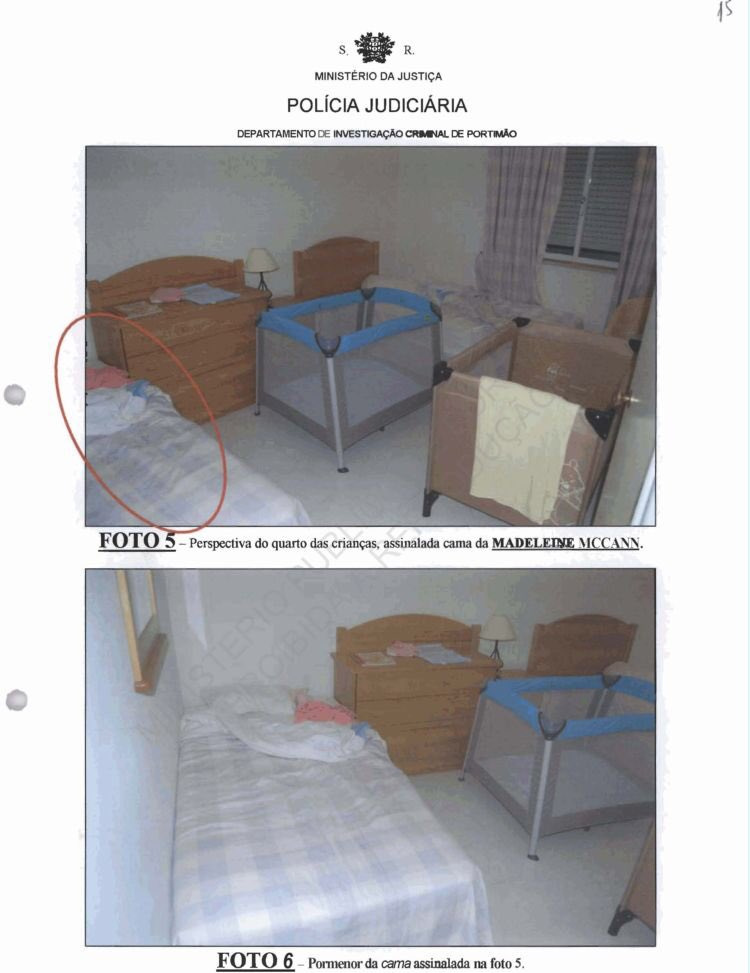
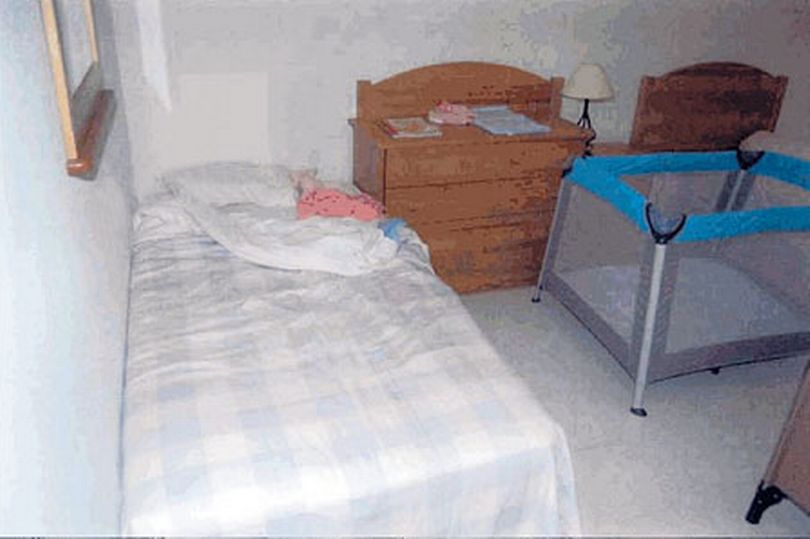
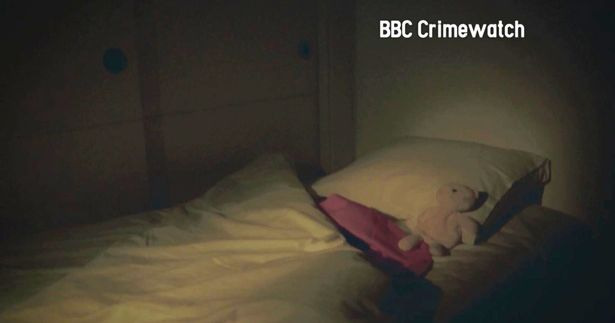
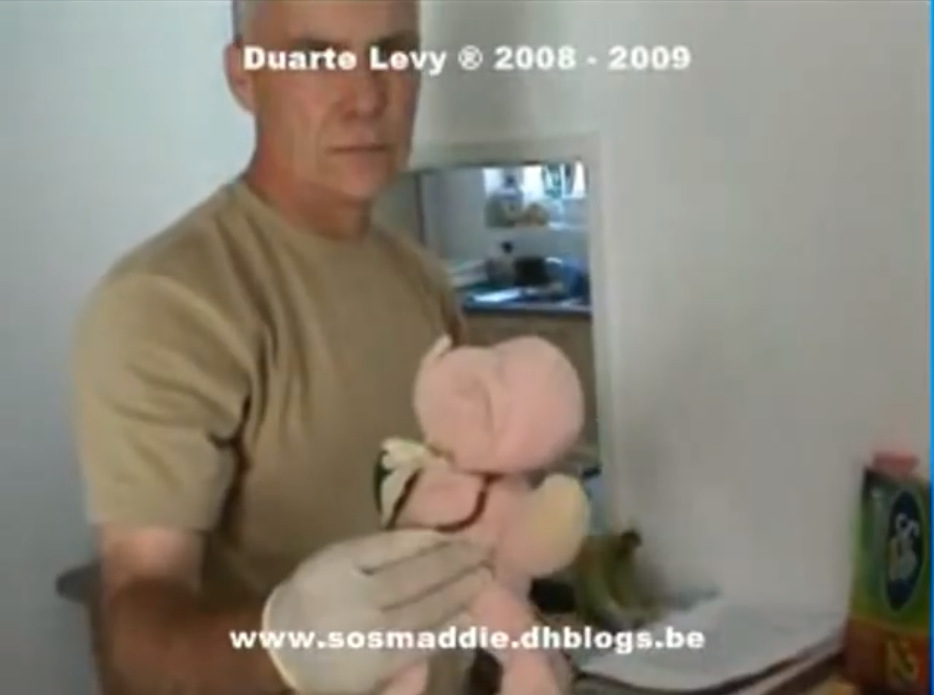
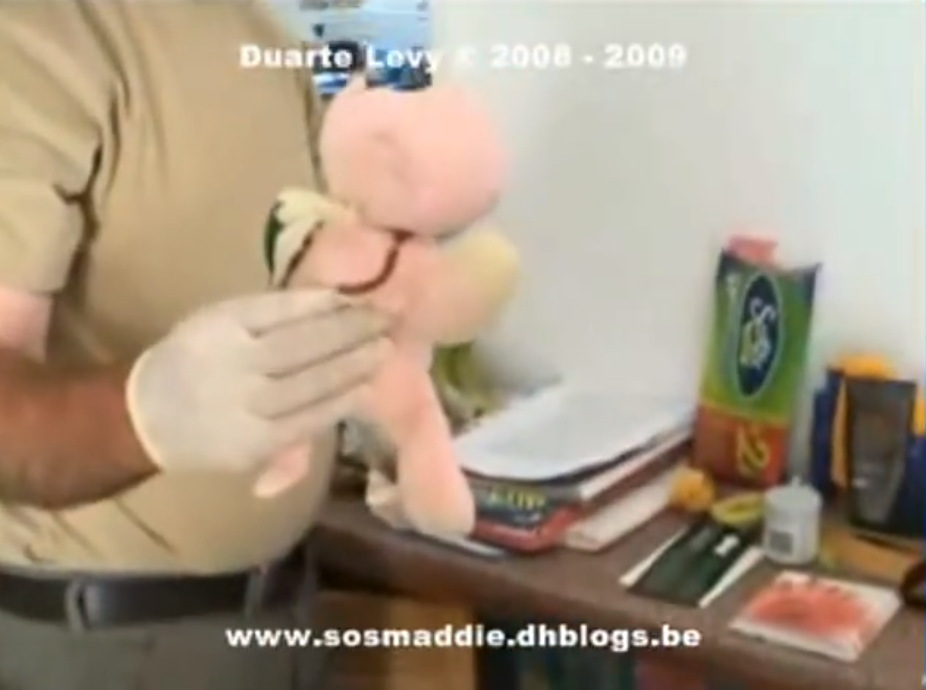
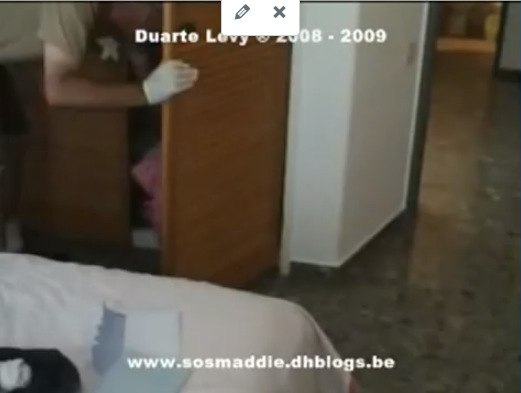
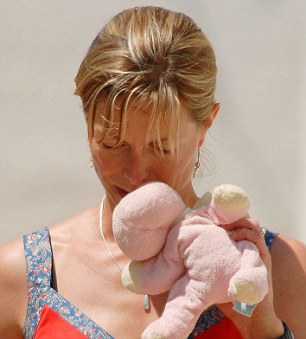
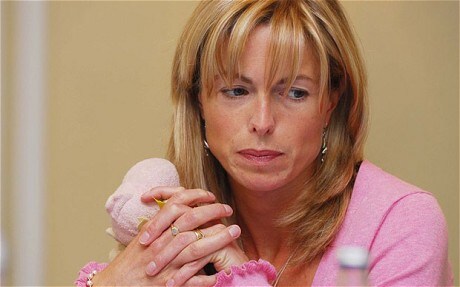
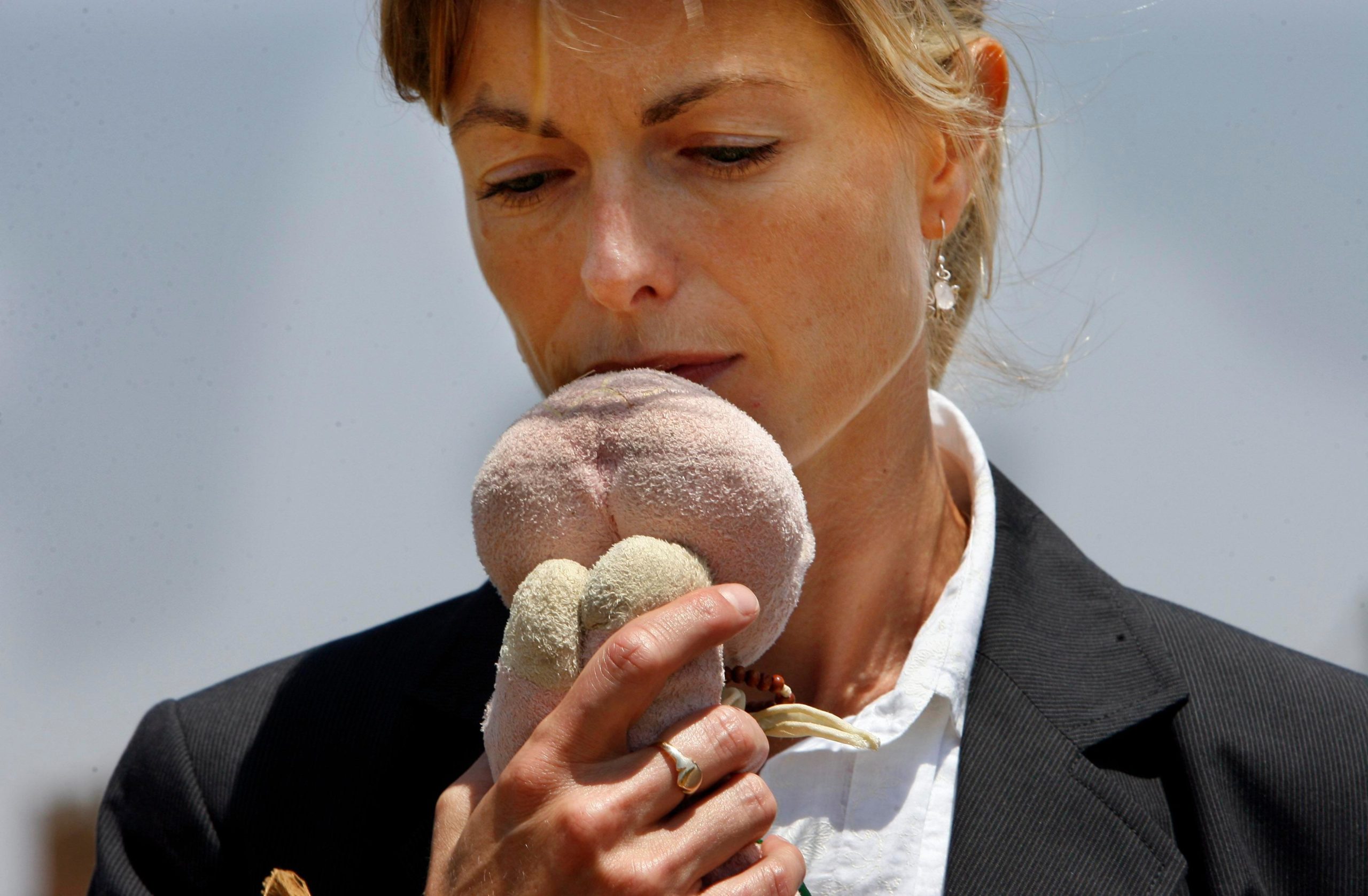
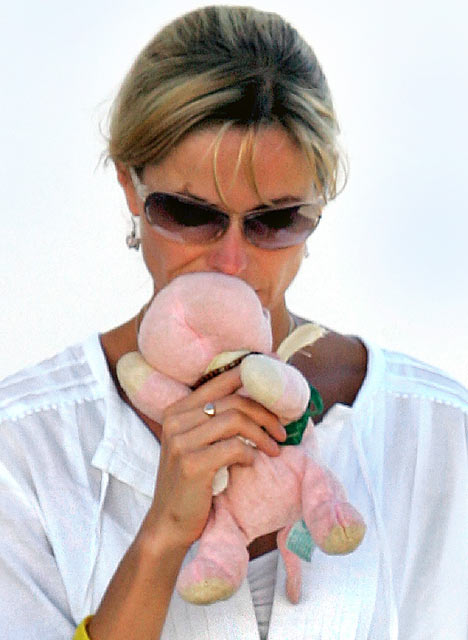

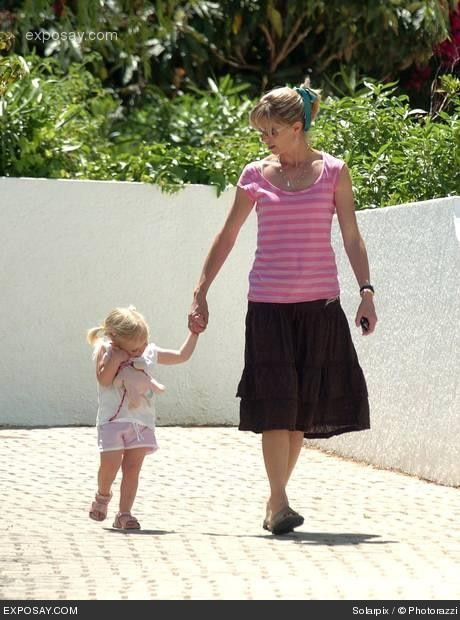
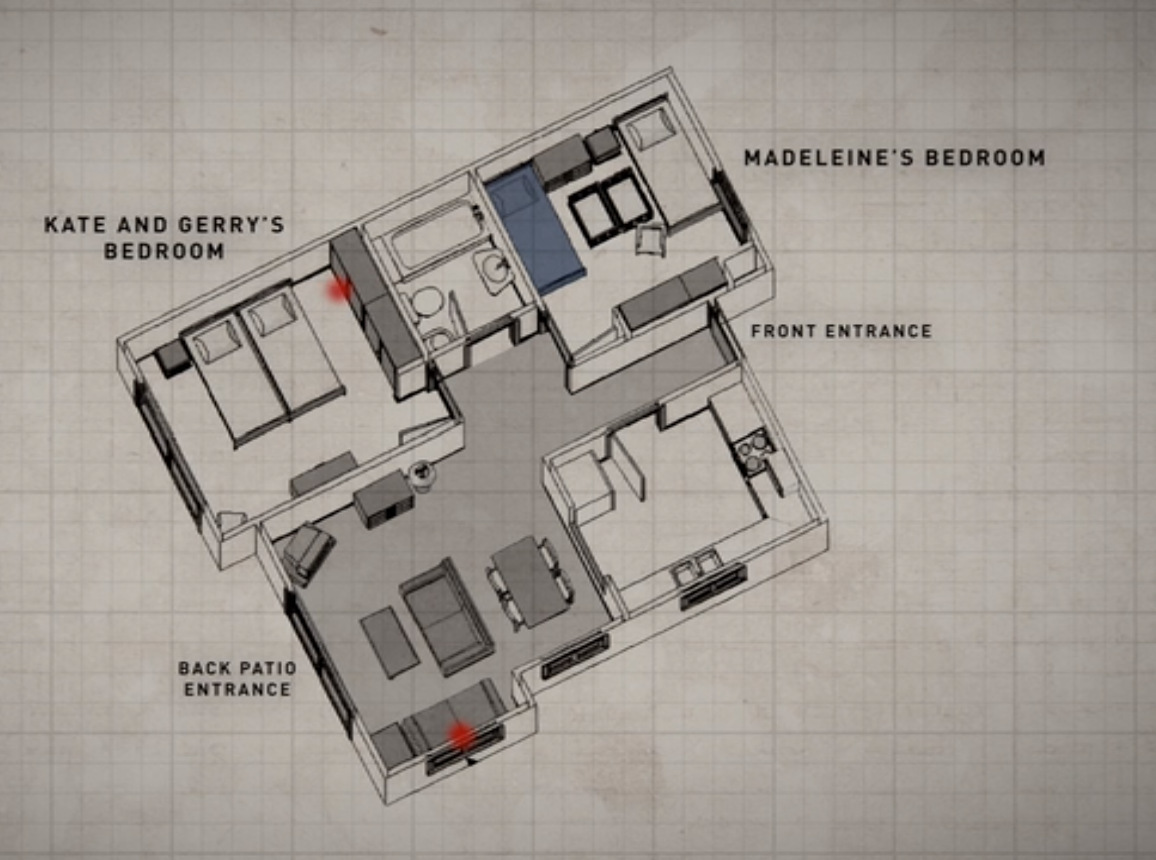
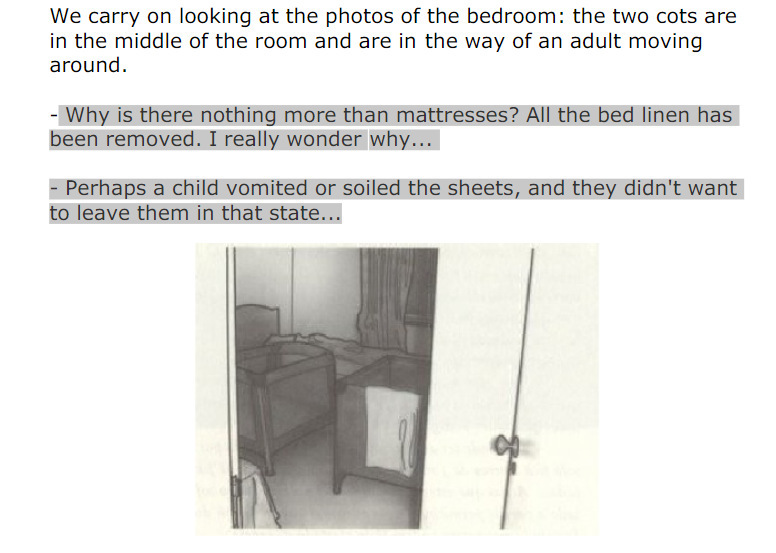
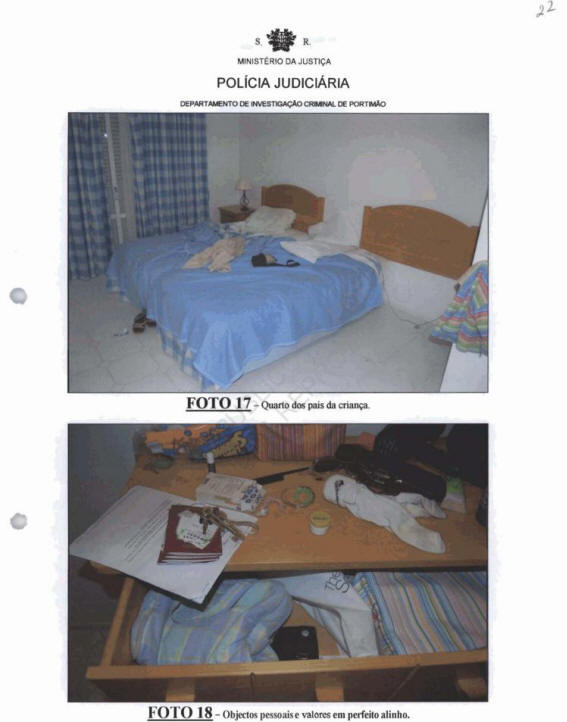
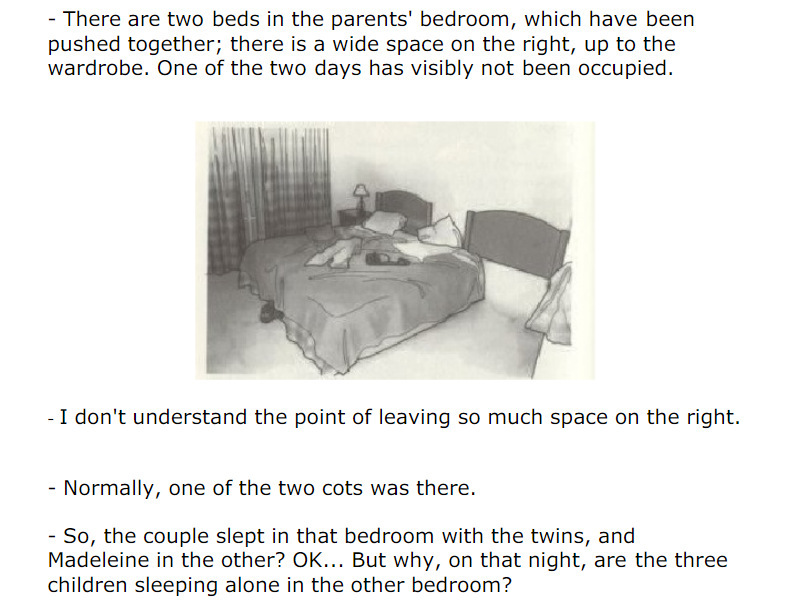
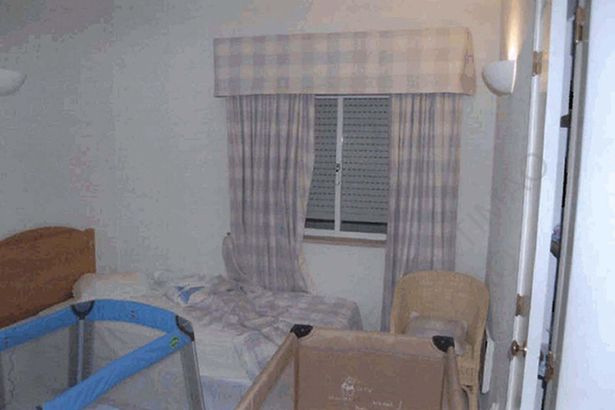
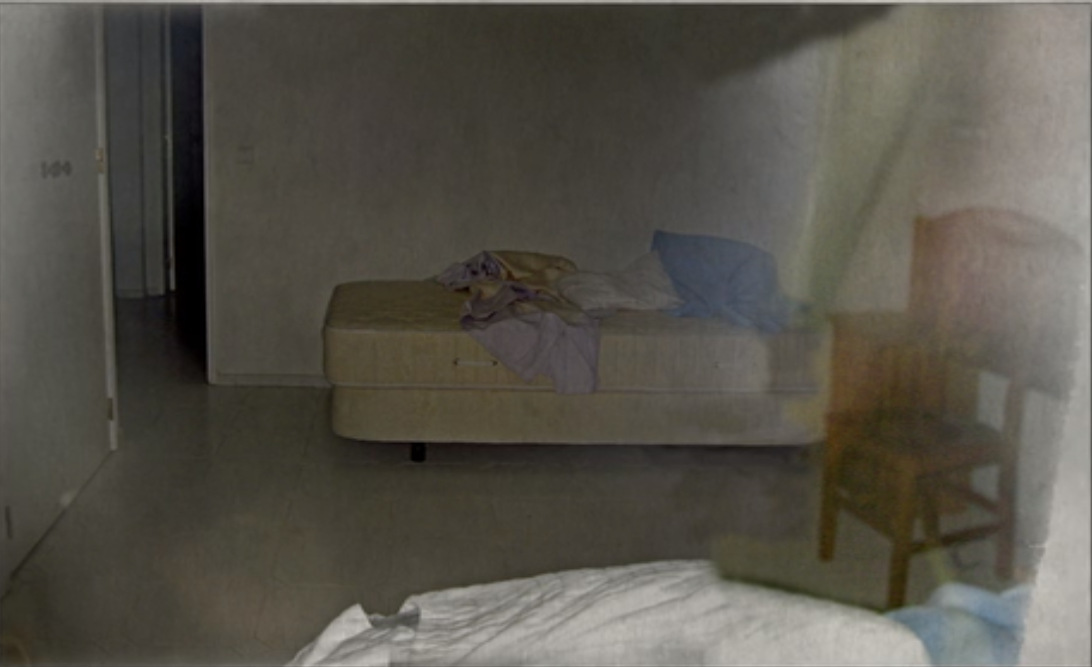


 In a later post I will explain why an additional alert in Madeleine’s bed should have been made [and would have had the cadaver dogs been brought in immediately] but wasn’t. It should be noted that some of the media graphics are incorrect and inaccurate not only in terms of the layout of the apartment, including the McCanns’ bed and closet configuration, but also what constituted the “front” and “back” entrance. This is somewhat confusing. The front entrance faces the road and car parking lot, while the back entrance faces the front of the hotel, and the balcony.


 He uses a secret scientific method to find murder victims by following their DNA trail with the help of global positioning satellites. A family friend said: “The irony for Kate and Gerry is that through them trying to move the case forward and be proactive








Recent Comments