It’s been 74 days since we last saw Jason Rohde, the millionaire convicted of murdering his wife Susan. Almost three months have past since the first phase of the sentencing trial [which usually lasts half a day to a day] was heard on December 5th, 2018. It was speculated that Rohde’s eldest daughter Kathryn would testify, but ultimately she did not. His younger daughters were writing final matric exams at the time. This was brought up in December as well.
Curiously during the trial none of the daughters names were to be uttered in court. This was strictly enforced by Judge Gayaat Salie-Hlophe. Post conviction, it appears, that’s changed.
Loadshedding affected some of the coverage but it seems the media have dodged a bullet today, with no loadshedding scheduled after it returned with a vengeance last week.
In three months, amnesia can set in. The sentencing court may “forget” the merits of the case, and become foggy about evidence. The defense can then pull out a new canvas and sketch their client to their heart’s content. To a point.
Today they’ve elected to try to do that using three character witnesses: two friends of the convicted murderer Jason Rohde will testify, and finally his mother, Brenda, will testify on behalf of her son in mitigation of sentence.
In hindsight, just like the entire trial, it seems much ado about nothing. Because Judge Salie-Hlophe made a passing remark right at the end of the court day that she didn’t really need the heads of argument from both counsels. This makes sense. Like the Oscar Pistorius case, and Henri van Breda, this one was pretty obvious from the get go. And like the Judge in the Van Breda case, Salie-Hlophe is pretty clear on what needs to happen to Rohde. He didn’t just commit a crime, he – like Pistorius and Van Breda – went out of his way to obstruct justice.
#Rohde Jason, who sports a new haircut, greeted his mom Brenda as he was led to the dock. She is sitting near him. Jason keeps his head down in court. (@JennaEtheridge) pic.twitter.com/oXFqTBWoVF
#Rohde: Jason Rohde sports a new shorter haircut having spent 74 nights in Pollsmoor prison. His eldest daughter, Kathryn, didn’t testify last year after judge Gayaat Salie-Hlophe refused her to testify in camera. @eNCApic.twitter.com/fnTySAAv1m
#Rohde Livingstone: I am aware of Jason's conviction but the purpose today is to testify about his character. I met Jason at our daughters' school in 2015. We have become very close friends. (@JennaEtheridge)
#Rohde: Livingstone met Jason on the gholf course and says he was also good friends with Susan. He knew the couple in Joburg and Plettenberg Bay. He says he got very close to Jason during the “dark days” after Susan’s death. “He’s been incredibly supportive of my business”@eNCA
#Rohde Livingstone says Jason has been his daughters' sole provider. He describes him as a kind, caring and supportive friend who cared not only about himself but others too. He said he paid for a two-week holiday for a disadvantaged orphan girl to Plett. (@JennaEtheridge)
#Rohde Under cross-exam, prosecutor Louis van Niekerk highlights that Livingstone never knew about Jason's affair. He also said Susan instigated charitable holiday for orphan girl. He says Livingstone didn't actually know Jason well. Witness disagrees. He is excused. @TeamNews24
#Rohde: Craig Fleischer says Jason was his best friend. He is testifying for mitigation of sentence. He got to know both Susan and Jason in Plettenberg Bay. Says he was also good friends with Susan.@eNCApic.twitter.com/KhRUr1TYmp
#Rohde All of this is intended to humanise him. Go through his entire life story. I'm surprised they're not showing him as a toddler. The idea is that it will be more difficult to sentence someone who's fleshed out than a cardboard cutout. Has amnesia set in after he long delay?
#Rohde Defence lawyer Graham van der Spuy (VDS) says that at last appearance, he had wanted to call Jason's daughter but she was reluctant. He then said she should stand down "and re-assess in the cold light of day". @TeamNews24
#Rohde Brenda: I put an ad in the newspaper and that is how we got divorced. I heard rumours that his father had gone to Australia and then the UK. I was 21 and Jason was about 2. Met current husband, who I have been married to for 46 years, when Jason was about 3.
#Rohde Brenda says no one has complained to her about Jason being violent. "If it has happened, I am totally unaware of it and I don’t think it has, as he doesn’t like aggression at such. He hates the display of violence. He is a gentle person." (@JennaEtheridge)
#Rohde Brenda: My husband was a cruise operator and I helped him. I later became an estate agent and started a business with Jason and my business partner. (@JennaEtheridge)
#Rohde Brenda says Jason's eldest Kathryn had to give up her studies last year because of the pressures of the trial. She and Jason "possibly have a better relationship than they ever did before and it’s such a lovely thing to see." @TeamNews24
#Rohde Brenda now going to discuss her son's personality and integrity. 'You've got to know Jason to love him. He appears to be aloof and standoffish. But as you get to know him, that's just his manner. As a business partner he's been very good. He's totally honest."
#Rohde: Brenda says she doesn’t have enough funds to support the three girls. The twins started studying this year. She is not sure how Susan’s family are gonna contribute to their upbringing but they are raising funds.@eNCA
#Rohde Now prosecutor Louis van Niekerk to cross-examine the murderer's mother. Cuts to the chase, talking to her about money. "They are very well cared for, at university, the twins." "I have no idea, I told you." "It's been financed by this trust he set up."
Judge Gayaat Salie-Hlophe cuts in early on to rap the prosecutor's knuckles. "The witness has answered the question." She seems to be on his case lately. #Rohde.
"Support of my son…to tell the truth." Prosecutor asks if there's an element of bias. "I wouldn't say I was biased. I just stated what I believe and what is fact." Brenda is excused. That concludes the mitigation phase. #Rohde
Prosecutor refers to a letter indicating R735 000 has been transferred into a Liberty Life trust for the twins' studies in early 2019. Behind him Jason sticks his tongue into his cheek. Puts into perspective Brenda's recent testimony about no money for studies. #Rohde
It's interesting that Susan Rohde appeared to have a life insurance policy with Discovery that included a suicide clause, meaning, unusually, there would be a payment in the event of suicide, presumably after a discretionary period [3 years]. #Rohdehttps://t.co/vc8ntLpn4N
Van der Spuy wants to submit closing heads of argument. Cites loadshedding for him losing an entire day of work. Wants postponement until Wednesday. #Rohde
The irony is that had Rohde been found innocent, and his wife “guilty” of committing suicide, a life insurance payment would nevertheless have kicked in. Having been found guilty, another insurance policy kicked in – from Liberty Life. Effectively then the mother’s death by her father has paid for her children’s studies.
#Rohde High Court will hear closing arguments today. Jason waves at friends in the gallery and chats with his mom Brenda. She asked the court earlier this week to be lenient with his sentence. Follow live feed here: https://t.co/IEeIctAkfL@TeamNews24pic.twitter.com/PgroTqANbi
"Had Mr. #Rohde taken the court into his confidence, that would have counted as a mitigating factor. But the converse cannot count as an aggravating factor." Interesting.
#Rohde: Should the court decide on the minimum of 15 years, I don't think a three or four year sentence for the severe state of defeating the ends of justice, warrants such a sentence. I think a sentence of 18-20 years is more appropriate.@eNCA
Behind the prosecutor, #Rohde scratches his temple, looks at the roof, glances into the back of Van Niekerk's head. Quite a contrast to #VanBreda who couldn't stay awake at this stage of the trial.
#Rohde Van der Spuy arguing there was no premeditation. Tough one. Fighting, strangling [which takes several minutes], staging. I'm not sure premeditation can be excluded. Judge Salie-Hlophe: "Are we not talking about premeditated murder?"
#Rohde VDS: The murder was committed in a moment of passion, absolute weakness and madness, and loss of control in the context of the accused simply having snapped. @TeamNews24
#Rohde: Van der Spuy: Jason was too embroiled in an adulterous relationship. He wanted to maintain his family relationships while enjoying the benefits of the affair. "Adultery ceased to be a crime many years ago. Such infidelity are nowadays quite a common occurrence"@eNCA
#Rohde We are back. VDS returns to murder. "I can only describe this as a moment of weakness or madness, in which he simply snapped. Court found he punched her on her eyebrow, he exerted force on her to immobilise, he throttled and smothered her." @TeamNews24
#Rohde Van der Spuy grandly claims how his client protected his daughters from the legal process during their matric exams. To be fair, when the exams were over [now] none of his daughters came forward to testify on his behalf. Clearly his defence sought their endorsement.
#Rohde VDS: "I can't come and argue that my client is remorseful for killing his wife [because he maintains his innocence]. It is clear that Mr Rohde has huge remorse involved in the death of his wife". Jason testified his misconduct led to her death. @TeamNews24
#Rohde Van der Spuy argues for every year the accused is absent, the children suffer. Judge breaks in to point out, "Ironically, the same applies to the deceased."
#Rohde LVN: A lot was made about his deep, good, warm relationships but one has to mirror that against how he reacted to his wife confronting him. He shied away from it. Judge says: "It's his personality. Let's not punish him for that." @TeamNews24
As Van Niekerk describes all the injuries suffered during "the beginning of the wrestling match", #Rohde can be seen on camera blinking behind the prosecutor's head. pic.twitter.com/33khwS0KU5
#Rohde The lighter blue block represents the rate in the rest of the world compared to South Africa. South Africa needs to get serious about #femicide real fast!
The word “fuck” appears 28 times in the Discovery Documents, two of those are from Trent Bolte [“fucking ridiculous”], but about half – perhaps surprisingly – aren’t from Shan’ann, but from Chris Watts. All of these instances from Watts occur in a few minutes during his “confession” with his father and FBI Agent Coder. Did Chris Watts see any of the messages about him on Shan’ann’s phone?
It was important to Watts to be thought well of, and clearly, Cassie and Nickole sided with their friend in solidarity against Watts, especially in the last week of Shan’ann’s life. If Shan’ann was against him, perhaps he thought he could handle that, but if she recruited her Facebook flock, what then? They could ruin his reputation in a public lynching, far worse than she’d just done to his mother on social media in early July.
Page 605 of the Discovery Documents provides the following instance of Watts quoting Shan’ann – what she supposedly said on the morning when he supposedly confronted her about wanting to end the marriage:
Ronnie asked Chris what Shanann said that morning when he told her everything. Chris said Shanann asked him why and asked him why he wanted to give up. Chris said Shanann told him, Fuck you, and fuck you, and fuck you.
On February 15 “new court documents” were revealed to the media about a possible motive in the Patrick Frazee-Kelsey Berreth case. The cops reckon custody was the main motive. It’s taken them awhile to figure that out, hasn’t it?
On December 23rd, almost two months ago at the time of writing, TCRS made a call on the motive in the murder of Kelsey Berreth. In fact the motive was mentioned in the very first paragraph of that assessment and infidelity was mentioned in a post on December 22nd.
I noted the strange circumstances surrounding Thanksgiving. Why would a couple who were engaged not be spending Thanksgiving together? Why was Patrick Frazee coming to pick up his daughter, and not his wife as well?
I will do more analysis on the Frazee case at some point, perhaps even a book, but first things first. Was custody a factor in the Watts case?
On the face of it, no. There are 44 instances of the word “custody” in the Discovery Documents, the overwhelming majority have to do with chain of custody issues affecting law enforcement, as well as evidence and cadaver collection.
In Nichol Kessinger’s lengthy interview on August 16th, she brings up custody a couple of times.
On page 1494 of the Discovery Documents, Shan’ann brings up custody [during her discussion with Olayinka Hamza, a lawyer from Glendale in March or April 2018]. She wants to know whether the custodial parents can be told where to live by a court, or whether a man can get custody. This discussion illustrates that even prior to the third pregnancy or the trip to North Carolina [or, arguably, the affair] Shan’ann knew her marriage was in terminal decline. This is difficult to reconcile with the glowing posts of her husband and marriage on social media at the time.
It’s interesting, in this respect, that Hamza recommended to Shan’ann to do everything in her power to save the marriage, rather than file for a costly divorce, and insodoing become embroiled in a long battle. It appears Shan’ann took this advice to heart. We know in the last days of her life, what with the self-help book, the getaway to Aspen, the counselling she had in mind, the letter she wanted him to write, Shan’ann wanted to avoid divorce.
But she was also ready to do battle.
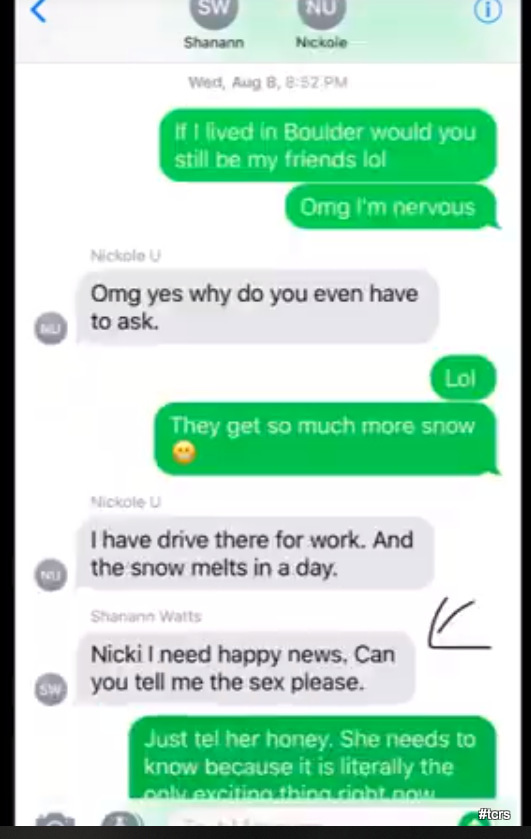
On August 8th she told her pals Cassie and Nickole that if it came to a divorce, she would fight for full custody.
Significantly, this is the first and only time the word is directly linked to Shan’ann. The timing is important, given what happens next. Watts, who at the time had been away from wok for a week spent just one day two days at work, and then took the next day [August 9th and 10th]off work leading to the weekend.
[Note: the August 9th “day off” [see below] is an error in the Phone Data Review.] The Augusy 10th “day off” however, is accurate.
It may be that during these days this day off he and Shan’ann discussed the custody issue, and discussed divorcing. And as the battle lines were drawn, he realized he was standing inside a tank with excrement swilling around his heels, warming them, and rising inch by inch.
So he told Shan’ann “he wasn’t in a hurry” to get divorced, which made her think she could still convince him to stay.
She was wrong.
This taking off of work may have had a dual purpose. Firstly, to prepare for the battle he had in mind [triple murder]. And secondly, to muddle those at work about his whereabouts. If he appeared at CERVI 319 on Monday morning, the few operators he encountered there might not think that much of it, and those who didn’t see him may have assumed he was still in North Carolina.
It may also have been intended to muddle Shan’ann. To pretend that things were okay after all and raise the white flag, at least until she was out of town again.
In any event, on the evening of August 9th Watts [Shan’ann was due to fly out first thing the next morning] he appears to be car shopping online. If he was going to do away with Shan’ann, the Lexus would probably have to go, and then he was going to need a chariot to ferry his beloved around in. He couldn’t do that with the work truck. He was going to need some wheels. And fast.
Because Watts was a mechanic and a car nut, it stands to reason that wheels played significantly in his calculus at this stage of the game. But he had a problem. Could he afford an Audi? Because that’s specifically what he was checking. Not just an Audi Q7, but the prices of an Audi Q7.
A second-hand Q7 sells for anywhere from $22 000 — $80 000 depending on the year of the model. Watts said he could only afford $1100 – $1400 to rent an apartment. Does that include money for a car payment?
It appears to be a family car Watts is after, here, doesn’t it? At this point Watts was probably doing the math and realizing he couldn’t afford any of it. He couldn’t afford a divorce. He couldn’t afford to move out. He couldn’t afford alimony. And if he wanted to keep Kessinger and do things the right way, he was going to lose everything – his home, their vehicle, the kids, his reputation and with no money, probably Kessinger too.
Without going into too much detail, we know that the week of the disappearance, Watts and Kessinger had agreed to go and look for a new apartment for him [and the kids]. But then by Saturday night [August 11], Watts’ mood had changed and he was no longer interested in getting an apartment.
What changed?
Watts did the custody calculations and realized he couldn’t afford to lose the house. He wanted the kids but if he fought for them he’d lose. And then he’d lose everything. It was either her and the kids [three kids], or Kessinger. Shan’ann made her choice. Then he made his choice.
What separates the gurus from the rest is that at some point – whether by reading or research – they find out for a fact whether something is this or that. By far the majority won’t know something, but then form an opinion based on hearsay or what’s in the media, and then their speculation is driven by that opinion. That’s not Rocket Science, it’s waffle and gossip.
Getting the information right isn’t easy, as I hope this post illustrates. Simple questions are devilishly complicated to answer.
I’ll be posting something shortly on Amber Frey, but before I do, let’s see who has got their headspace in the right place in terms of the mistresses “voluntariness” in this case versus the Scott Peterson case.
If you can provide a link or source to your answers, all the better. In terms of the Amber Frey question, my trilogy on Scott Peterson also dealt with this issue.
The most correct answers stand a chance to win Book 6 in the series. If you’d like a chance to win used #Kindle in your comment [regret this is not open to Amazon.co.uk readers].
Here we go.
1. Did Amber Frey [Scott Peterson’s mistress] approach the cops? If she did, when did she come forward?
2. Who is Hazel Heckers?
3. When was Detective Baumhover introduced to Nichol Kessinger for the first time?
4. Nichol Kessinger and Chris Watts exchanged texts on Tuesday, August 14 about the paternity of the unborn child.
WATTS: It’s not mine.
KESSINGER: It’s OK if it is.
WATTS: OK, then it’s mine.
Are these texts in the Discovery Documents?
5. Did law enforcement request assistance in the investigation of the Chris Watts case, or did [some other entity] offer it? Do you know when this request/offer occurred?
6. When District Attorney Michael Rourke addressed the court he spoke for approximately 13 minutes. Did he mention Nichol Kessinger during the sentencing hearing?
7. Nichol Kessinger was asked to provide her Verizon phone logs. Until what date were those phone logs and when did she give them up?
8. When was the last text message sent between Watts and Kessinger and what did it say?
If Shan’ann was in financial difficulty previously [and she was], the solution seemed to be fairly simple. Move someone in and scrimp. She did this in 2015 when they went bankrupt. She moved in her parents for 15-16 months. Presumably this “saved” money in child care fees, and by pooling resources, food and meals could be cheaper when the expenses were shared by four rather than one or two.
How would you like to live with both your in-laws for over a year?
When Shan’ann had neck surgery, Cristina Meacham came to stay for two months in 2017.So in 2018, when they were scraping the bottom of the barrel again, there was an easy solution in the offing. Do what she’d always done. Move someone in and piggyback until things improved.
That someone turned out to be Josh and Cassie Rosenberg, just another family of Thrivers [a mom and pop team, and their kids], who could pool their resources. This plan wasn’t just theoretical. We know this because on Saturday night [August 11] when Watts was wining, dining and [doing other things] with Nichol Kessinger, Josh Rosenberg sent Watts a text to ask if everything was okay – could they still come and stay at the house.
Josh had good reason to be uncertain if the plan was still in the offing, He knew because Cassie knew that Watts and his wife were arguing. If they arguing, where did it leave them?
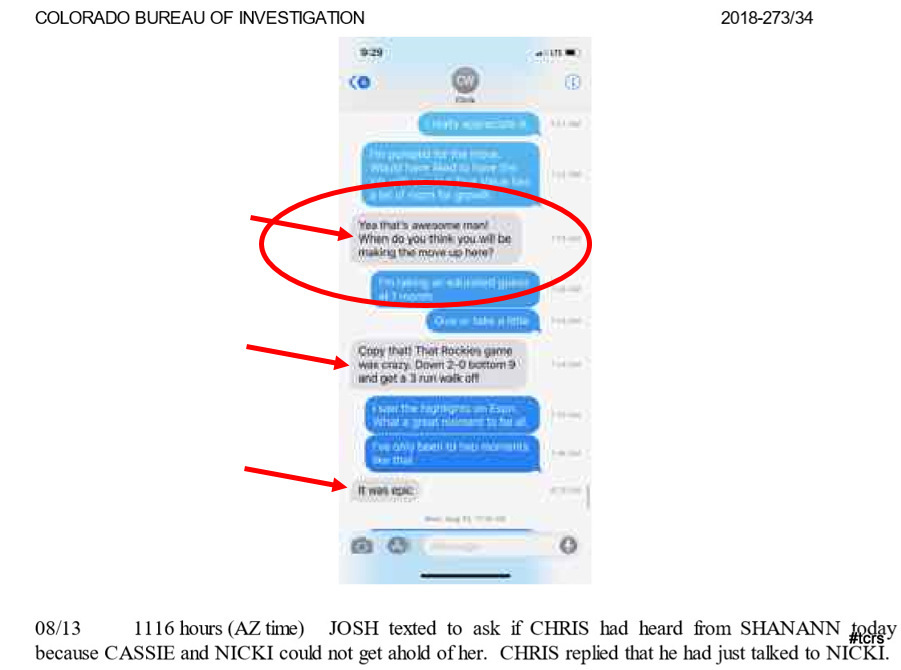
Watts didn’t respond to Josh until the next morning – Sunday [August 12] – and when he did he said it was cool [even though it wasn’t cool at all]. Watts said they could move in, but wanted to know when.
Watts then lied to Josh about something else – he pretended he knew what it was like at the Rockies game.
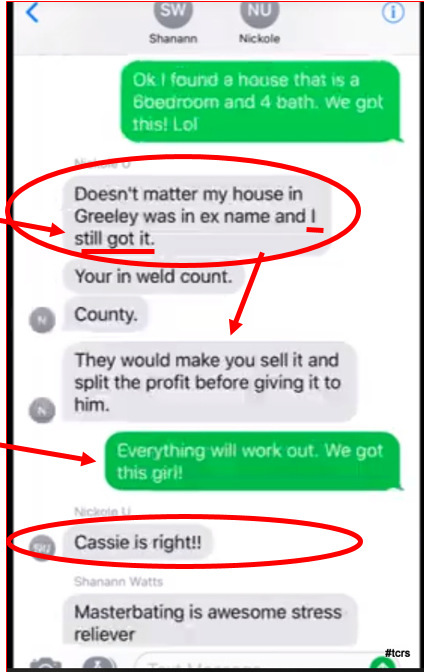
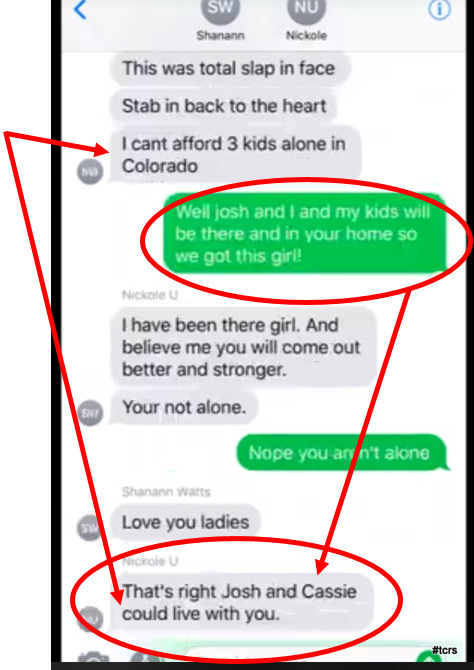
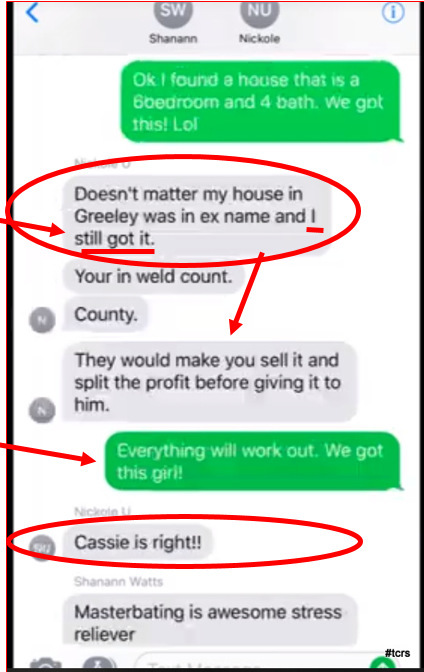
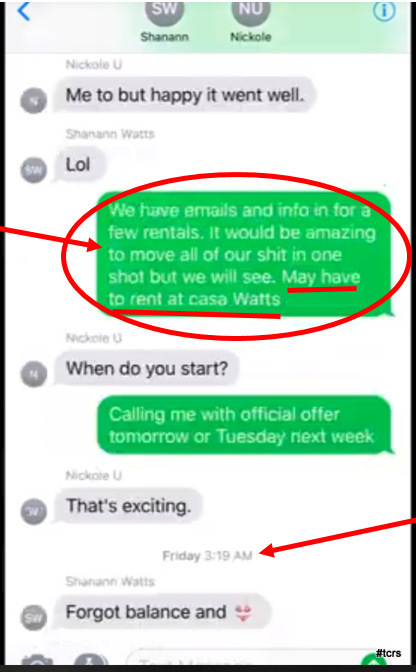
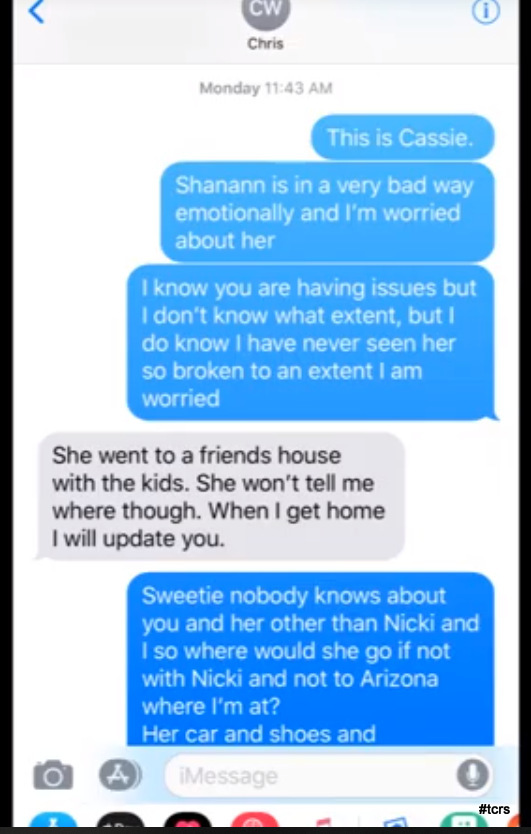
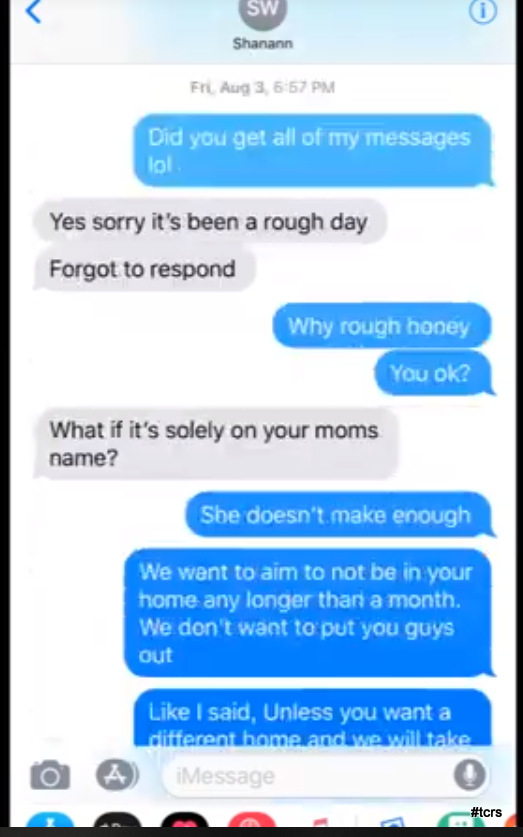
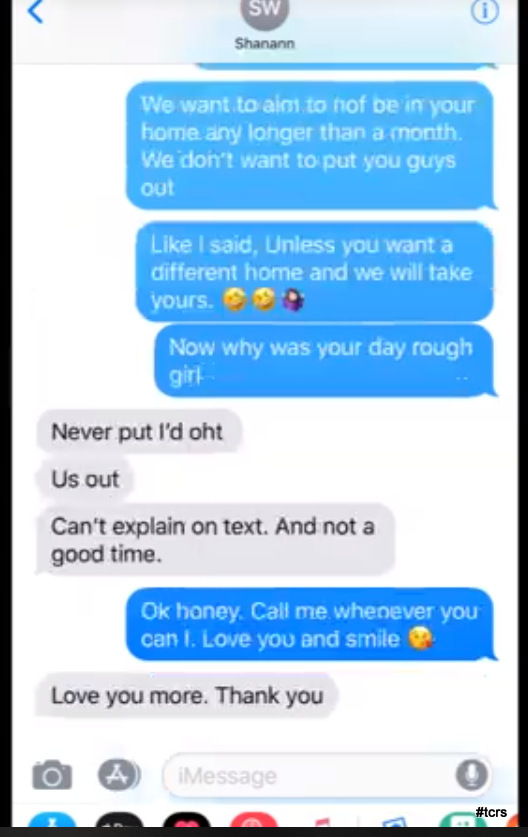
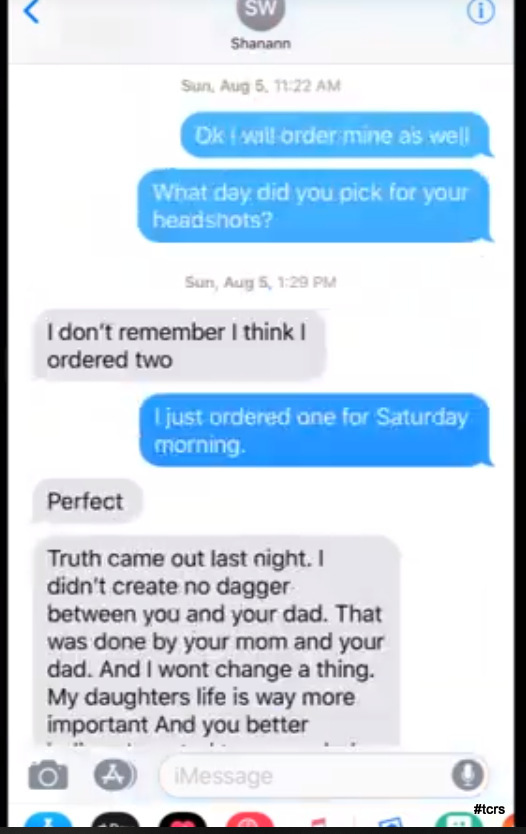
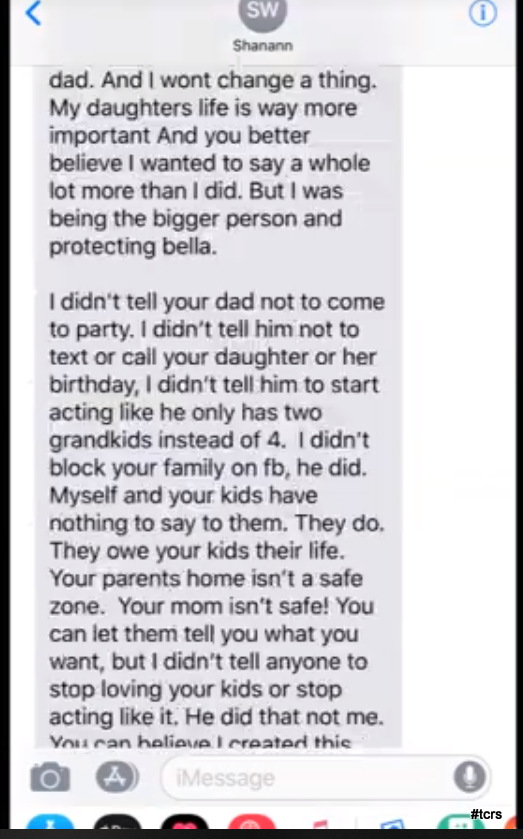
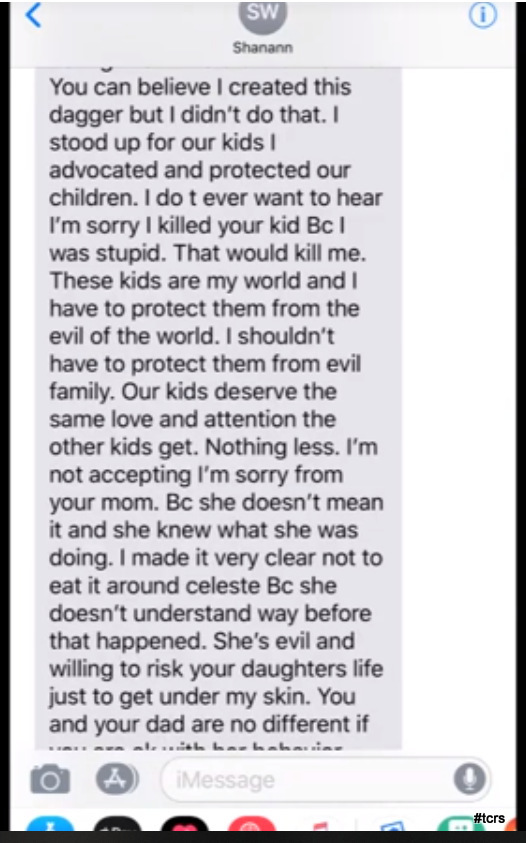
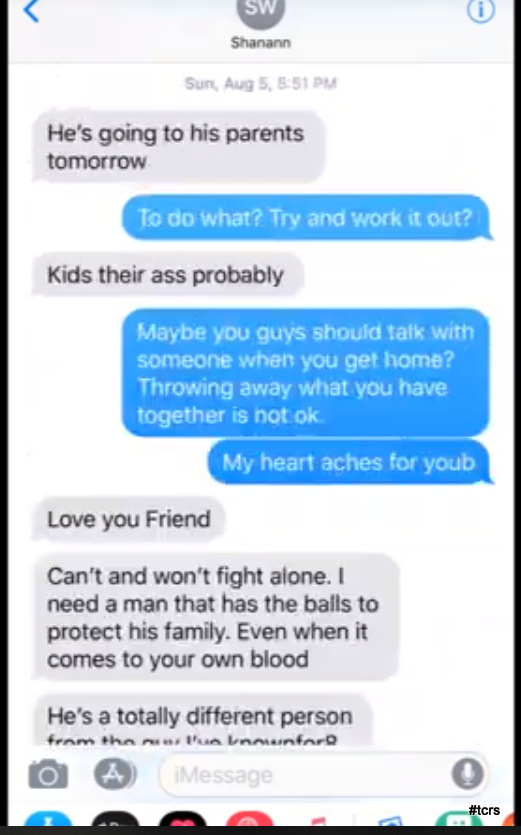
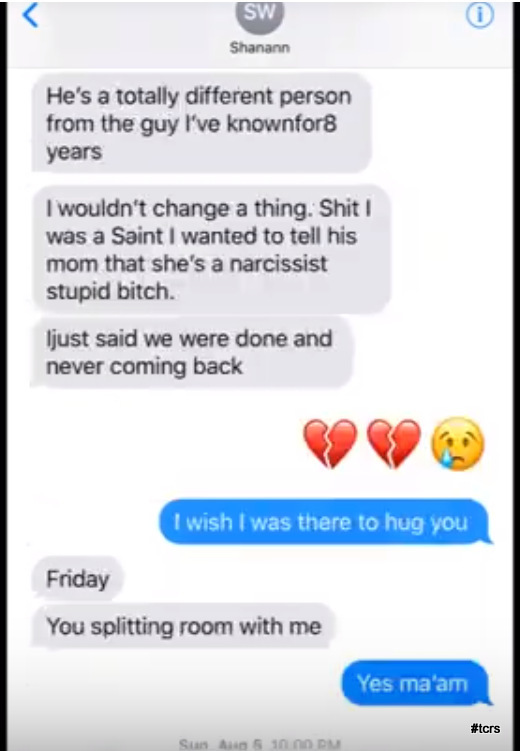
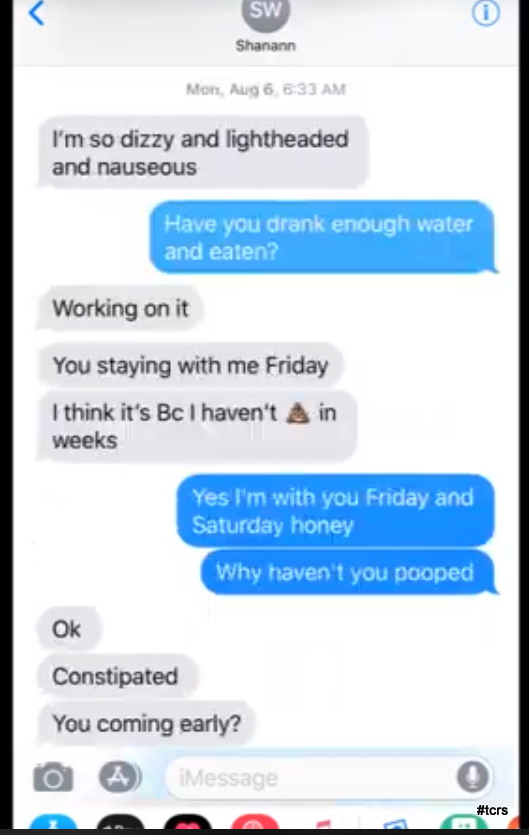
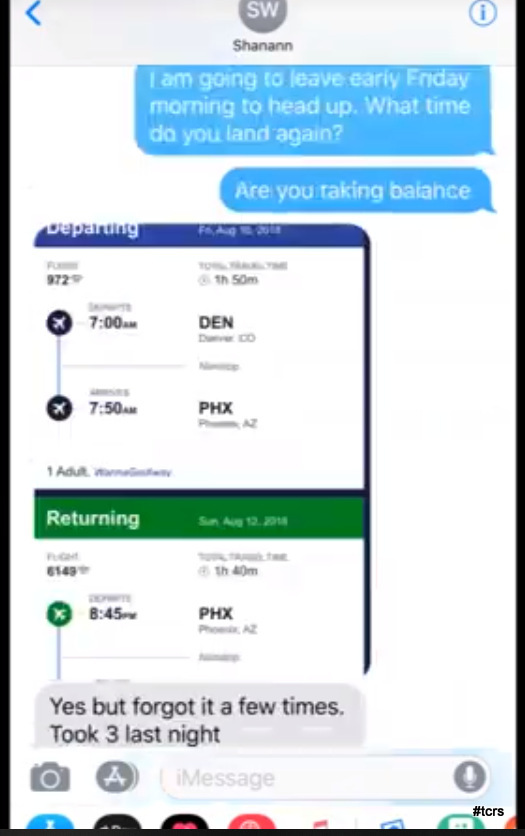
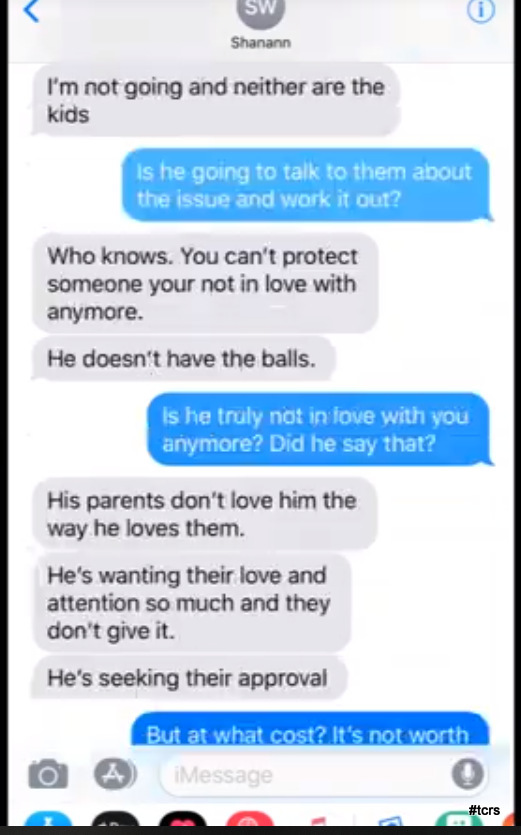
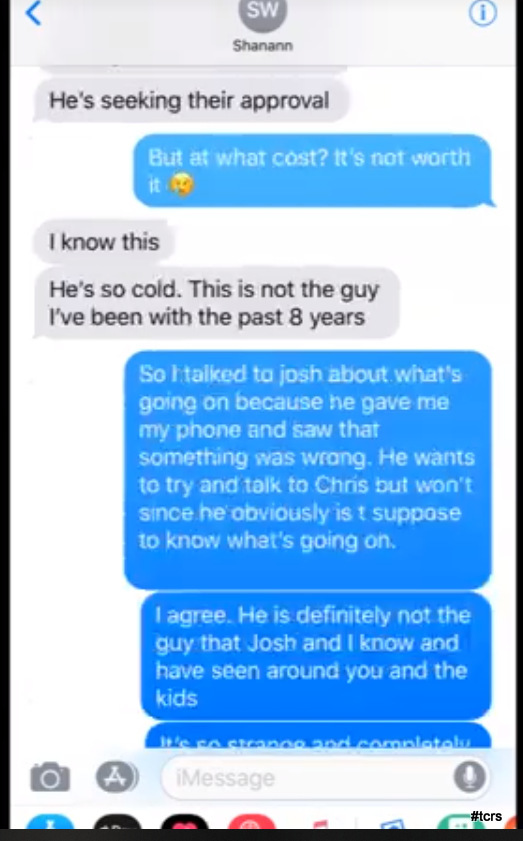
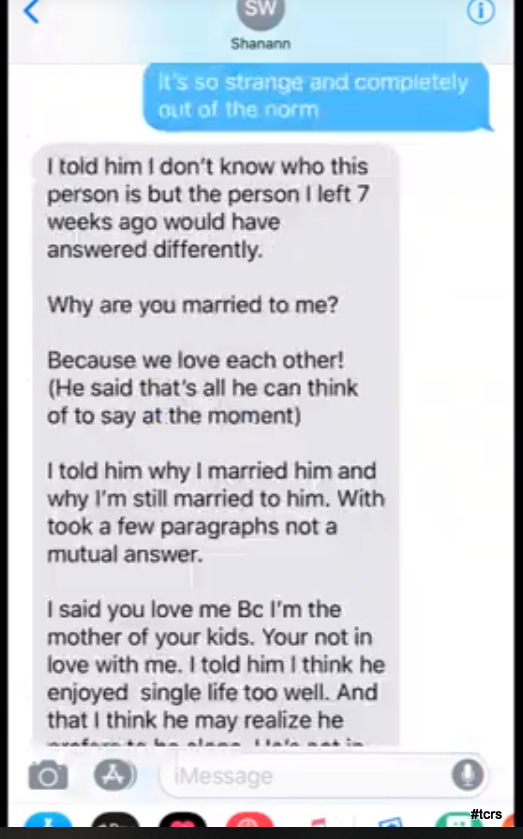
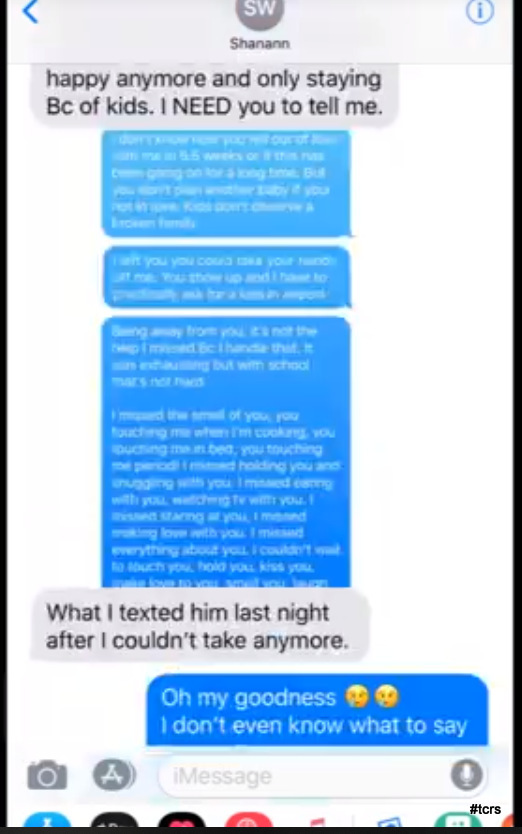
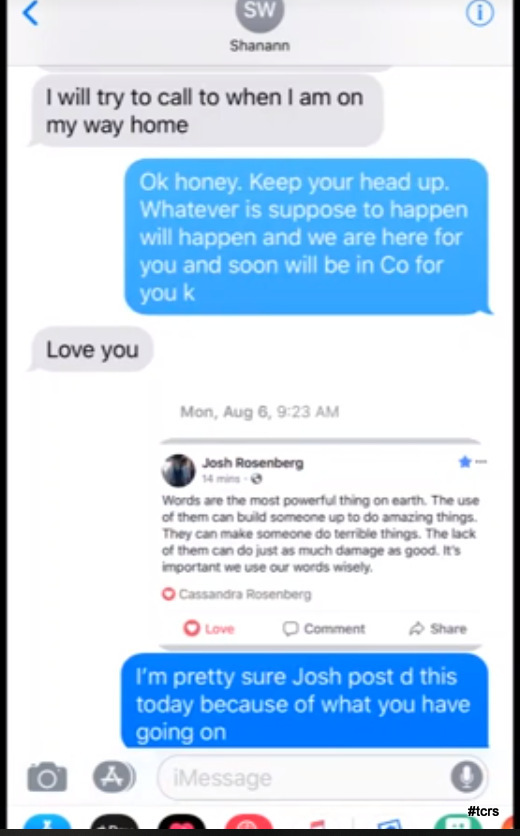
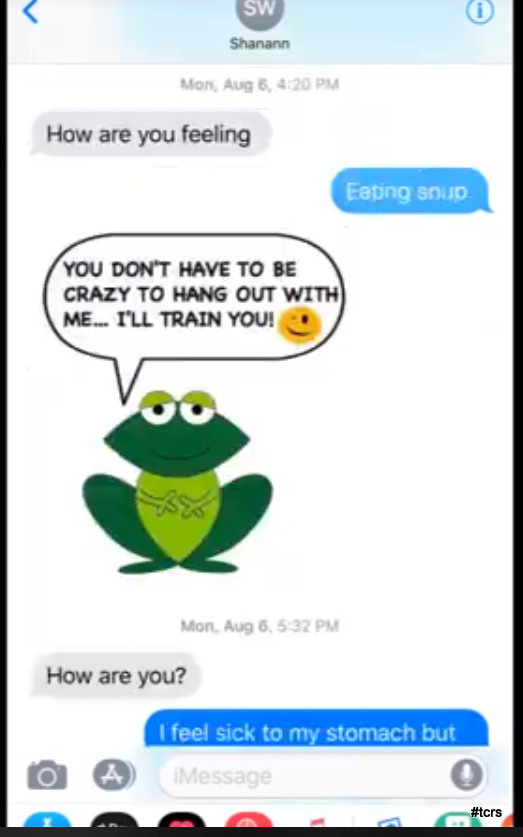
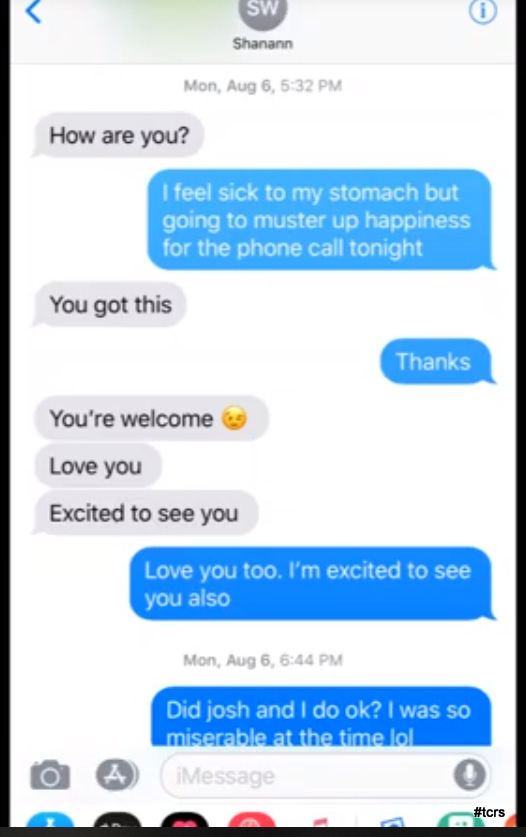
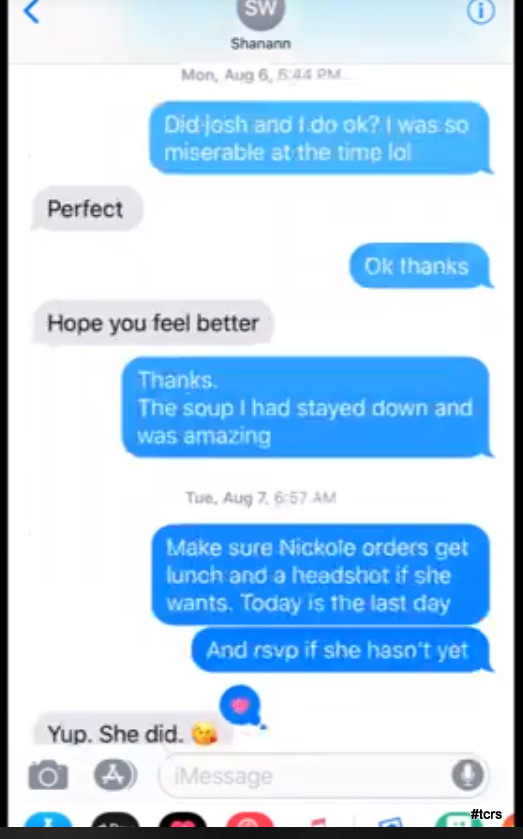
It’s important to see the texts between Shan’ann and her pals Nickole and Cassie in context to get a real sense for how the idea of moving in with Shan’ann [to provide support, perhaps help pay the bills and take care of the kids] came about.
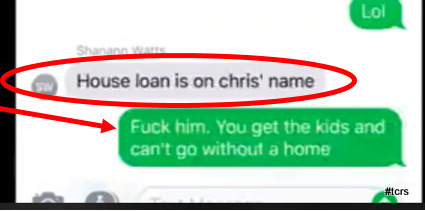
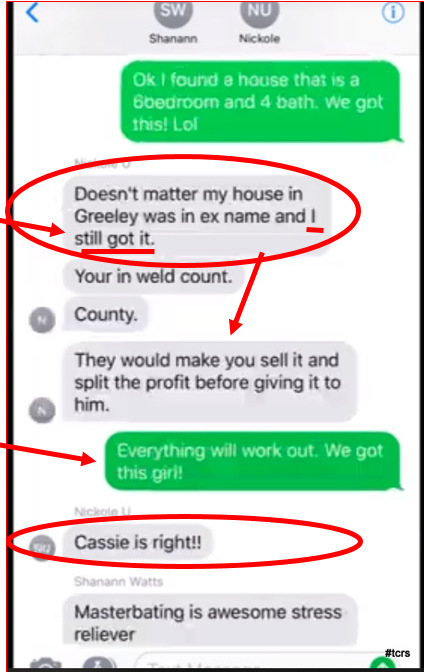
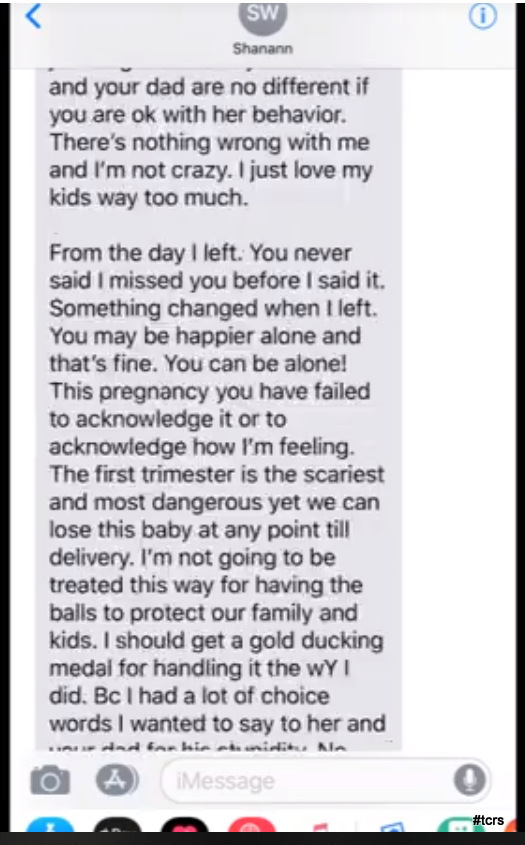
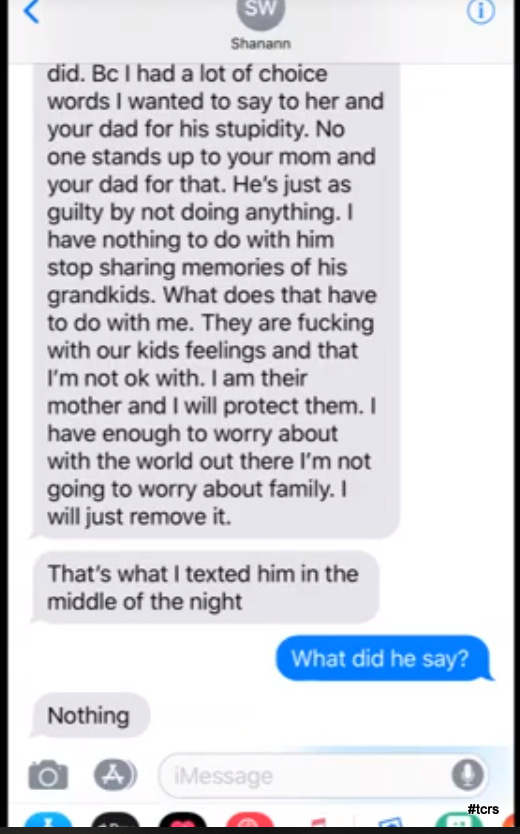
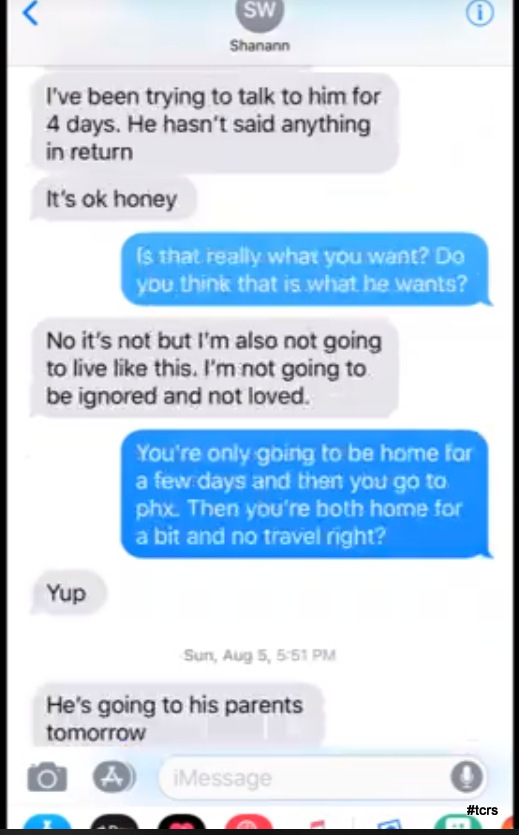
It’s clear – and to some extent understandable – that Shan’ann, Nickole and Cassie had formed a formidable alliance of three, and they meant business. Fuck him was the general theme of it. Fuck him and take the house. Even though the house was in Watts’ name, they figured they could sort of bully their way into it and taking charge, and at the very least, taking the kids and getting half of what the house was worth. Fuck him!
Perhaps under normal circumstances Watts would have crumbled and turned the house over to his wife and whoever she wanted to stay over/rent/cohabit or whatever. But these weren’t normal circumstances. This situation this time around definitely wasn’t going to work for him and his mistress.
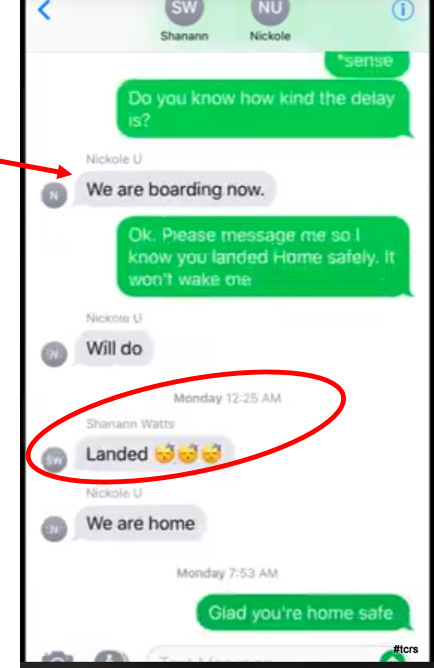
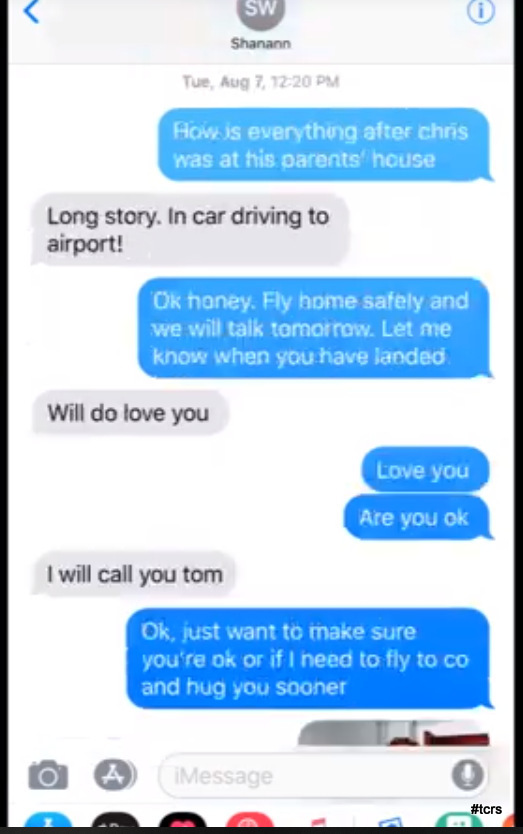
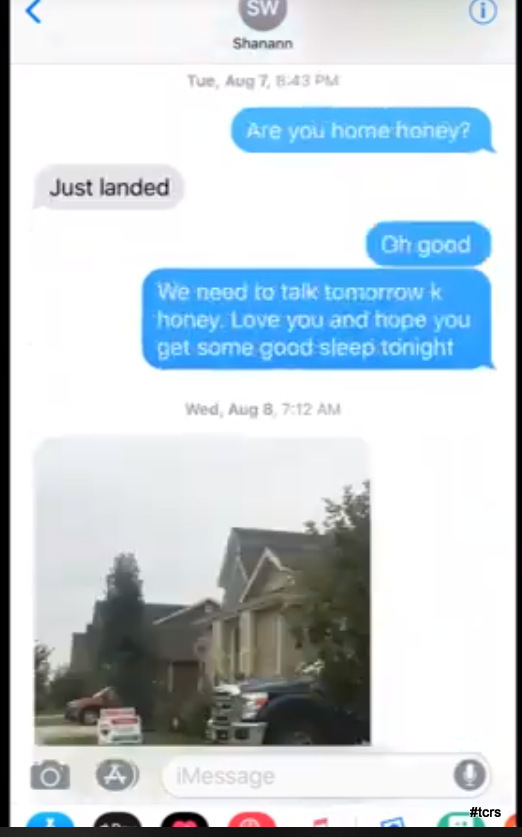
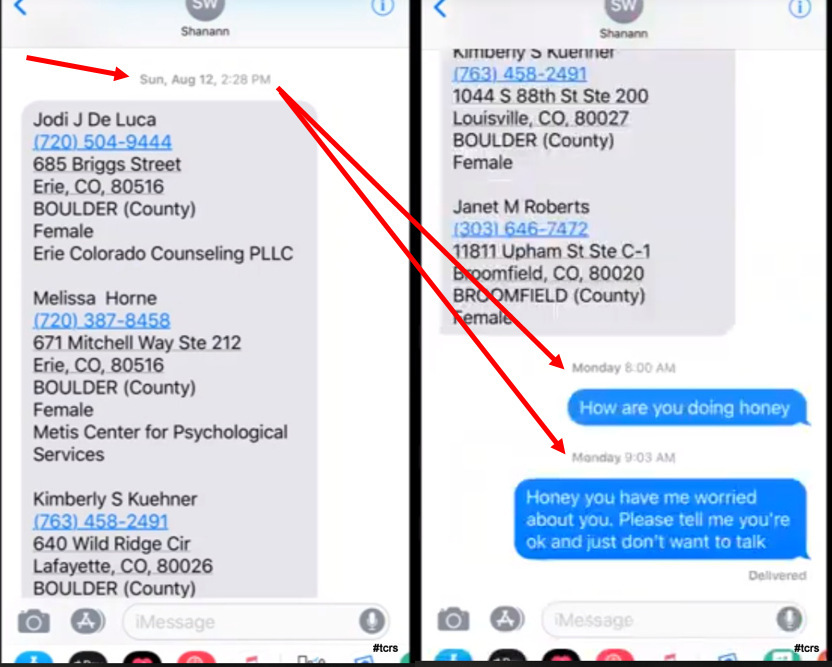
The red arrows and circles in some of the final texts below point out specifics of the conversation to move in to casa Watts, and also how Weld County deals with alimony and splitting the house, even if it is in the husband’s name.
“I have enough to worry about with the world out there I’m not going to worry about family. I will just remove it.”
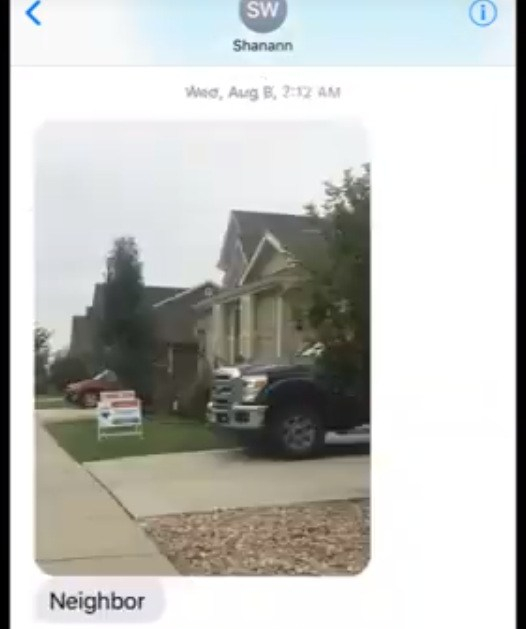
These images are of a for sale sign on the lawn of the Trinastich residence. It’s also possible if the for sale sign was on the lawn during the six weeks Shan’ann was away, Watts could have been nudged – almost on a daily basis – to contemplate whether he could keep his home. And we know where that calculus took him, once he took time to do the math.
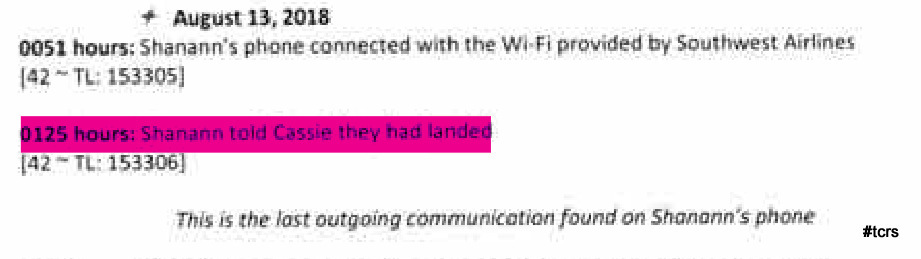
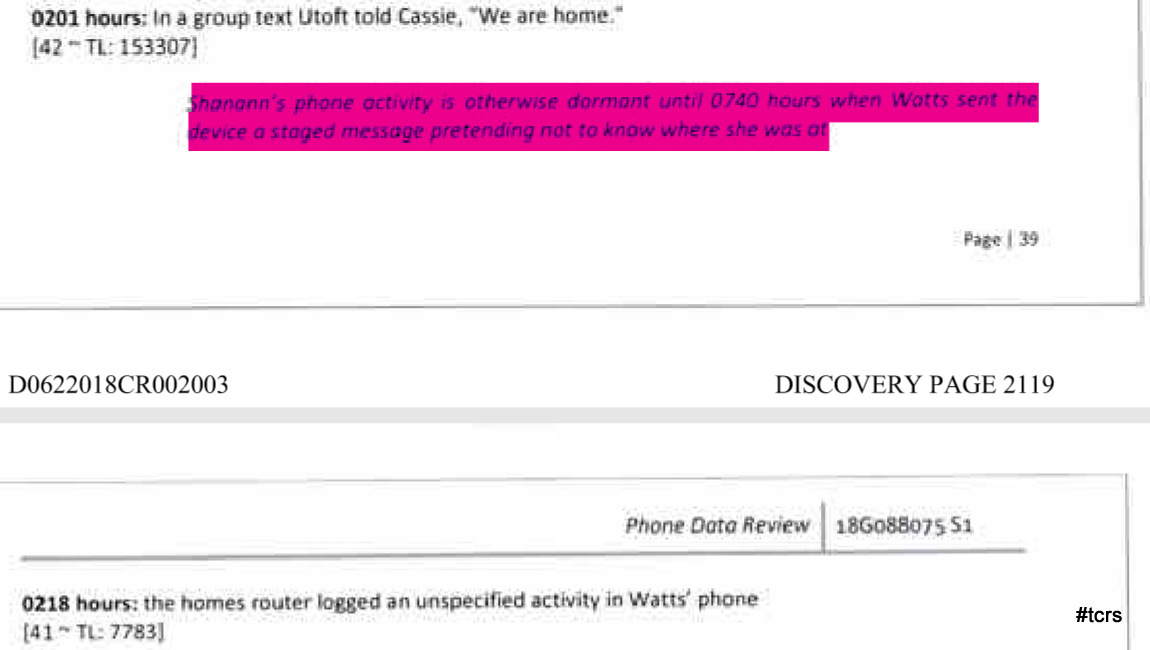
Below is Shan’ann’s final ever message on her phone: On iPhones do text messages and WhatsApps [or messages via the internet] appear on the same screen? If so, then why did Watts’ message at 07:40 not appear on Shan’ann’s phone? Could it be because the phone was off, or because the router wasn’t connected, or is there another explanation?
Like the Chris Watts case, when I found out Oscar Pistorius had shot someone to death – four times – through a closed [locked] door, I thought it was an open and shut case. I paid attention to the headlines, but I wouldn’t say I dropped everything to focus on the case. At that stage I was a professional freelance photojournalist [full-time]. Most of my work involved writing for magazines and occasionally doing shoots for corporates like Mercedes Benz and the Square Kilometer Array.
The day after the murder I wrote this post on Facebook.
Early on there was pushback. “Don’t speculate if you weren’t there.” “It’s not our place to judge.” “Leave it to the lawyers.” “Only God and Oscar know what really happened.”
On the first day Oscar appeared there was pandemonium in court. It was a media circus, and although they didn’t know it then, Oscar himself was the ringmaster.
09:37 – As soon as Oscar Pistorius starts to enter court, photographers start shooting. Magistrate protests. – @karynmaughan. @AlexCrawfordSky tweets that Pistorius is wearing a dark blue suit.
09:48 – Nel: Pistorius shot an unarmed innocent woman…she was unarmed and inside a toilet. Pistorius sobs, his head in his hands– @karynmaughan
09:53 – Nel: “The deceased arrived between 5 and 6pm [with an] overnight bag and cosmetic bag. The deceased was shot three times while [in] the toilet.”
09:55 – Pistorius breaks down in tears in court, Sky News reports.
10:25 – Roux suggests that Pistorius broke toilet door to get to Reeva, to help not harm her.
10:26 – Pistorius breaks down uncontrollably now as his defence suggests he did not know it was Reeva behind [the] bathroom door, tweets @AlexCrawfordSky.
10:27 – Roux: We say it can never, ever be a schedule six. It’s not even a murder.
10:33 – Pistorius blows into his hankie. He’s been crying throughout the hearing.He looks exhausted, says @karynmaughan.
12:15 – Nair: I have received written and oral argument. Nel is relying on objective facts…
12:16 – Pistorius wipes his eyes with a tissue, seems to be trying hard not to sob audibly.His brother leans forward as if to touch him but too far – @Simmoa
12:22 – Pistorius looks up straight to the magistrate as he reads his judgment on the seriousness of the offence, says @AldrinSampear.
12:26 – Nair: At this point in time, I cannot rule out premeditation. For the purposes of bail – we go Schedule 6.
12:27 – Pistorius reacts with more tears then leaves court for another break, tweets @BBCAndrewH.
12:31 – David Smith tweets: “Pistorius family grouped in small circle, weeping, arms around each other. Cameras clicking and filming from every angle.”
12:32 – Pistorius family and friends hold an impromptu prayer meeting after Nair ruling, says Karyn Maughan.
13:48 Pistorius: I fail to understand how I could be charged with murder let alone premeditated murder as I did not intend to kill my girlfriend.
13:50 – Pistorius is leaning forward and sobbing.His brother Carl has his hand on his shoulder, tweets Barry Bateman.
13:51 – Oscar Pistorius: I deny that I committed murder in the strongest point. Even though I don’t have to, I want to deal with these allegations.
13:54 – “Reeva had bought me a present for Valentine’s Day. We were deeply in love.” Oscar sobs.
13:55 – Karyn Maughan tweets “Nair interrupts court: my compassion as a human being doesn’t allow me to continue this.”
13:56 – Magistrate urges Pistorius to compose himself and listen. Says he will give him a few minutes.
13:56 “Nair is going to give him 2 minutes to speak to his family, to regain his composure“, tweets Barry Bateman. 13:57 – Barry Bateman tweets: “Nair tells Oscar he needs to concentrate. We adjourn for a few minutes. Nair asks no photos be taken.”
14:49 – Nel: I will call investigating officer Hilton Botha to reply to Oscar Pistorius statement.
14:55 – [Pistorius] stands, staring straight ahead, eyes narrowed as magistrate gathers his papers. Nair waits for him to leave so cameras can’t [photograph] him.
15:11 – Media behaving like a mob outside court, swarming to get comment. Crushed – @MandyWiener
I remember well tweets coming through exclaiming, as if the Earth was shaking, that “Oscar is crying”, which would result in the entire show shutting down and the court decamping while Oscar – like a deity – recovered himself. The same shitshow would later repeat itself during the criminal trial, a trial Oscar said he didn’t understand why there was even a need for because it was all an accident.
Following the first day of the bail hearing, the prosecutor’s star witness, Detective Hilton Botha, was shortly booted out of the trial. His crime was he’d shot at the tires of a taxi, and since there were several people inside, he faced multiple charges of attempted murder.
It sounded bad, a lot worse than it really was [just like Oscar’s sobbing and retching in court], but the defense won their gambit and Botha’s testimony had been thrown out.
How did I start writing about this particular trial? It didn’t start by focusing on the crime or the criminal, but the victim, and I guess it started for me on Facebook. Since I was a photographer, and since Reeva Steenkamp was a model [sometimes featuring in magazines like FHM and Heat], we were friends on Facebook.
It started by looking on her wall to see her final post [ironically, it was a post to thank another photographer for his work].
Later I would return, and read more about what she said was going on in her life. Reeva’s penultimate post was about gender violence and standing up and speaking out against crime.
As time went by, I waited for Reeva’s story to be told. Each day the headlines featured wall to wall coverage of Oscar, and it was always about Oscar. But I wanted to know about Reeva. Who was she? What was her story? What happened to her?
As I became more curious, I began to go further and further into Reeva’s timeline on Facebook. This curiosity had no agenda. I didn’t intend to write or cover anything, I was simply interested in who the person that had been shot dead had once been. The best answers to my questions, I soon found, were coming from her.
As my knowledge and insight expanded, the media managed to maintain a protracted silence about Reeva.
I guess that’s when my journalistic instincts, and my thirst for justice, kicked in.
My coverage of the Oscar trial started off as a magazine article, and started off not focusing on the man everyone was reporting on breathlessly, but rather the woman he shot. It was about Reeva. And ironically, that magazine article never saw the light of day.
There’s a narrative around that article. It ended up being 12 000 words which I thought could be cut up and printed in 4 parts. I had early interest in South Africa’s largest tabloid magazine, and they assured me they wanted to use the piece, and then they started to drag their feet and make excuses. They said the hype had passed, and suggested holding the article over until Reeva’s birthday in August. When her birthday came they passed on the article. They did, however, cover many of the aspects mentioned in the article bit by bit [including a cancer scare, a portentous picture Reeva painted as a child, and a prior incident she’d experienced with her mother when criminals broke into her home. The tabloid told me they covered this independently after I sent them the research.
While the article on Reeva was in magazine limbo for months, I went on with other work but I started to pay more attention to Oscar. I wasn’t really interested in him so much as a person, I simply wasn’t starstruck by him at all, and as a sportsman myself, I didn’t think his claim to fame [a double amputee competing against able-bodied athletes] was particularly authentic.
So when I wrote about Oscar for the first time in early March 2013 [two weeks after the murder], it was for a financial magazine, and it had to do with Oscar’s spectacular failure to deliver as a brand ambassador. Early on I recognized him not as a hero but as a performer. An actor. A showman. And a failed one at that.
I believe I was also one of the first to recognize Oscar’s emotional behavior in court [and later on television] as a sly attempt and a ploy to influence the outcome. In court, his tone of voice was often high-pitched when he testified, in keeping with his ridiculous claim that the victim [Reeva] had never screamed, and that what five different neighbors heard wasn’t her screaming in terror, but him screaming in terror [because he’d mistaken her for a burglar].
If it was a ploy, it worked. Oscar’s play for sympathy initially got him off the murder charge. The female judge, who had something of a disability herself, found Oscar guilty of culpable homicide [manslaughter] and sentenced him to five years in jail [effectively 10 months].
It was at this moment, when the first trial was complete, that I realized my sense of mission in true crime. In true crime there is seldom an open-and-shut case, and this is especially rare in high-profile true crime. The Chris Watts case is a very rare exception of a case that was wrapped up in super quick time, and a nice bow tied around it.
In true crime, I’ve learnt, things are seldom what they seem – not only the criminals themselves, but the crime scene, the appearance of things including and especially in the media, and the way things are spun in court [by both counsels].
In the end my magazine article on Reeva Steenkamp was recycled from 12 000 words down to just 2000, and published in Marie Claire magazine.
As crazy as this sounds, about a year after writing the original 12 000 word piece, I sent an email to another bestselling author [I won’t say his name]. That email was dated April 14th, 2014, and I still have it. I sent this author, who I’d heard was writing a book on the Oscar trial, all my research and was ready to tip my hat and head off in the sunset back to the world of freelance photojournalism.
In June, I mentioned somewhere on social media that this author [I mentioned his name] was using my work and I was quickly contacted by him by email, rebuked and admonished. I sheepishly apologized, letting him know the offending message was viewed – ultimately – only 38 times.
And then I had a change of heart.
I met with a fellow writer – of crime fiction as it turned out – and told him as a sidenote about the fate of my article on Reeva Steenkamp. He suggested I publish it on Amazon. It wasn’t a route I wanted to go. “So you’re just going to shelve it, put it in a drawer and leave it.” That was what I intended to do. Meanwhile the criminal trial finally got going and the silence on Reeva – from her friends, from the fashion and magazine industry, from journalists and photographers, and even from her on family – continued.
And then I thought, fuck it, I don’t want to be part of that silence. When I published Reeva in her own Words on Amazon on June 6, 2014, I fully expected it to disappear into a digital drawer. But then it didn’t. Instead it sold each day, and for 200 straight days afterwards.
The success of the book along with the message that was going out prompted me to publish other research I’d accumulated but, for various reasons, had been turned down by a slew of newspapers. It didn’t take a lot of work to simply package these articles [written, polished and edited] into a single document. That was published the very next day, and Recidivist Acts too was an immediate success.
The journalist in me recognized that the readership was getting something from me that they weren’t getting anywhere else. I’d simply never considered writing for Amazon the way I wrote for magazine editors.
And so, after the first two “books” were published [neither of which were intended as books, but rather started life as failed print media pitches and submissions], I decided to write what I really had to say about the case. I studied law in my university days, and I’d been keeping an eye on the legal proceedings between ongoing journalism jobs. I published Resurrection before the verdict of the trial came out. Many found this pre-empting vulgar and offensive. It was “too early” they complained, for a book to be out. Meanwhile, others quietly bought it and read it.
I was so effected by Reeva’s story [and still am] that I elected to put her face on every cover, and use the letters R and S [for Reeva Steenkamp] in every title I used.
Resurrection was my first attempt to decipher motive in true crime. Motive was completely missing in the media narrative at that point, and ironically, from the trial narrative as well. The prosecution simply never fielded one, and the judge – rightly – remarked on this. Technically a motive isn’t necessary, it doesn’t have to be proved in a criminal case, just intent. But this was probably the biggest failure of the otherwise savvy prosecutor. If it was a premeditated murder, at least offer an idea why you think it happened.
Since no one was having that conversation, I was.
When I wrote Revelations, I wanted to discuss another issue that had been left out of the court narrative. The timeline of events. The method of the murder. Incredibly, neither counsel had provided the court with a timeline [at that point], and the prosecution was nitpicking on evidence rather than providing a scenario for how the murder actually played out. While the attempt to return several times to key parts of testimony to catch the accused off-balance made sense, they also had the undesired effect of confusing the timeline [and, as it turned out, the judge].
In October I contacted the bestselling author I mentioned earlier and gave him instructions that he no longer had permission to use any of my research. He said this would be possible but problematic, and asked if I also wanted my name removed from his list of acknowledgements. I said I did.
[The author later published a book which amounted to apologia, a bogus sympathy narrative on Oscar written with the approval, and input – it seemed – of Oscar’s family. The author’s way of addressing what Oscar was thinking – his motive – was a cop out, something unknown and unknowable. Ironically that book today has fewer reviews than the research – published as a book – that I’d given to him. Currently my books on the case are also ranked far higher on Amazon than his book].
The South African media, with rare exceptions, mostly ignored my coverage. In one instance, I was invited on a radio show not to have a serious discussion on my research, but as a comedic ploy, where a top detective was invited to poke holes into my amateur research for the amusement of the morning show radio audience. The comedy aspect didn’t quite play out as planned, for the host.
Ironically, we [the celebrity detective and I] ended up agreeing on a vital aspect of the case – that Reeva was shot either while she was on her phone or about to make a call. I brought up this aspect and when the host asked Piet Byleveld to comment, he said it made sense. What I didn’t say is that it’s also possible Reeva had Oscar’s phone in the cubicle that Valentine’s Day morning when she was shot, and that’s the reason he started bashing down the door with the bat, and then reverted to shooting through the door.
Johnson needed 1 hour. Barry Roux now hitting his 1 hour mark. About to make final submission. Praises Judge Masipa. #OscarPistorius
Then I started sitting in on the trial in person, rather than watching it on television. I sat in as an accredited journalist, and reported on the sentencing trial, the appeal and the verdict of the SCA. That’s yours truly [see below] in the red and blue beanie, participating in the media scrum.
I also traveled to meet Reeva’s parents in person, and communicated a few times with her cousin [who also testified at trial].
At one stage, after the Supreme Court of Appeal sent the case back to the judge for a review of sentence, I had a brief meeting with the prosecutor, and we were going to have a witness I’d found and interviewed, testify in aggravation. The prosecutor contacted the witness, warned her of being targeted in the press, and she subsequently decided not to testify.
As the trial dragged on, media interest waned. Finally, when the original fuck up was finally overturned and the Oscar was found guilty of murder [and sentenced to the minimum of 15 years], the media coverage was gone.
I was there on the final court day and no one else was. Not the family of the killer, not the family of the victim. Not even the lawyers. Instead of the large legal teams, a skeletal crew representing them attended. The biggest, most high-profile case in the country’s history ended not with a bang, not with a celebration for the triumph of justice, but a whimper.
I learned valuable lessons during the Oscar trial. I learned how justice isn’t a given even in “open and shut” cases. I learned how dumb and biased the media can be. I saw the powerful impact of PR to set up a bogus narrative while drowning out the victim, and rendering her completely invisible. I realized just how clueless vast swathes of the public can be. Even with bumper to bumper coverage, most people watching the case remained ignorant or misinformed, which makes them easy to manipulate. And they were. Many, like the judge, fell for the performance and lost sight of the obvious, let alone the letter of the law.
I learned how important motive, a timeline, and relationship dynamics are, even – and especially – when no one is talking about these, including the lawyers arguing the case.
Most important, through Reeva, I learned to see beyond the cardboard cutouts, and to see these people as people. People as flesh and blood, admirable at times, beautiful sometimes, but also fallible. People not so different, after all, from you and I.
Through Reeva I saw the way to truly understand true crime is through the interiority of the people involved, and 14 books later, I’ve taken on the mantle of true crime full time. Today I write books for a living. Instead of magazine articles, I write mostly about high-profile cases, but sometimes I depart into other areas, like mountain climbing, art, travel, my late mother, or even fiction.
Since I started writing books five years ago, in mid-2014, I’ve had some success. DOUBT, covering the Madeleine McCann case, went up to #2 on Britain’s competitive true crime bestseller charts in 2017, during the ten year anniversary period of her disappearance.
I’ve also had some of my books reviewed [negatively of course] by the “exonerated” defendants themselves. The international media have paid more attention to my work [you know what they say about a prophet in his own hometown] especially of the JonBenet Ramsey case. Given the massive coverage this colossus of a case garnered in America and worldwide, it was a real test whether I could add anything to that narrative. I think I did.
In POST TRUTH, the 100th True Crime Rocket Science [TCRS] title, the world’s most prolific true crime author Nick van der Leek demonstrates how much we still don’t know in the Watts case. In the final chapter of the SILVER FOX trilogy the author provides a sly twist in a tale that has spanned 12 TCRS books to date. The result may shock or leave you with even more questions.
SILVER FOX III available now in paperback!
“If you are at all curious about what really happened in the Watts case, then buy this book, buy every one he has written and you will get as close as humanly possible to understanding the killer and his victims.”- Kathleen Hewtson. Purchase the very highly rated and reviewed SILVER TRILOGY – POST TRUTH COMING SOON.
TCRS MERCH available now – just in time for Christmas!
Book 5 – ALL NEW! “I have thoroughly enjoyed this audiobook…” – Connie Lukens. Drilling Through Discovery Complete Audiobook
Read the entire 9-Part TWO FACE series, the most definitive book series covering the Chris Watts Case
Visit the TCRS Archive of 100 Books dealing with all the world’s most high-profile true crime cases.
Join the TCRS Community on Patreon for as little as $1 per month. Multiple daily posts, interesting discussions, amazing audiobooks narrated by the author, ongoing series and powerful, informative weekly podcasts.
Subscribe to the Growing TCRS YouTube Channel
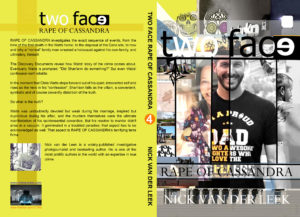
Book 4 in the TWO FACE series, one of the best reviewed, is available now in paperback!
“Book 4 in the K9 series is a must read for those who enjoy well researched and detailed crime narratives. The author does a remarkable job of bringing to life the cold dark horror that is Chris Watts throughout the narrative but especially on the morning in the aftermath of the murders. Chris’s actions are connected by Nick van der Leek’s eloquent use of a timeline to reveal a motive.”




 So in 2018, when they were scraping the bottom of the barrel again, there was an easy solution in the offing. Do what she’d always done. Move someone in and piggyback until things improved.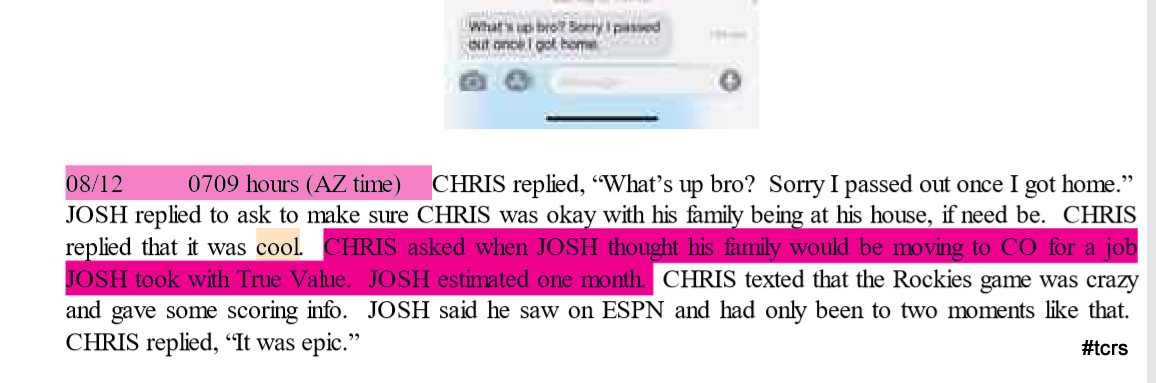
















Recent Comments